Outcome


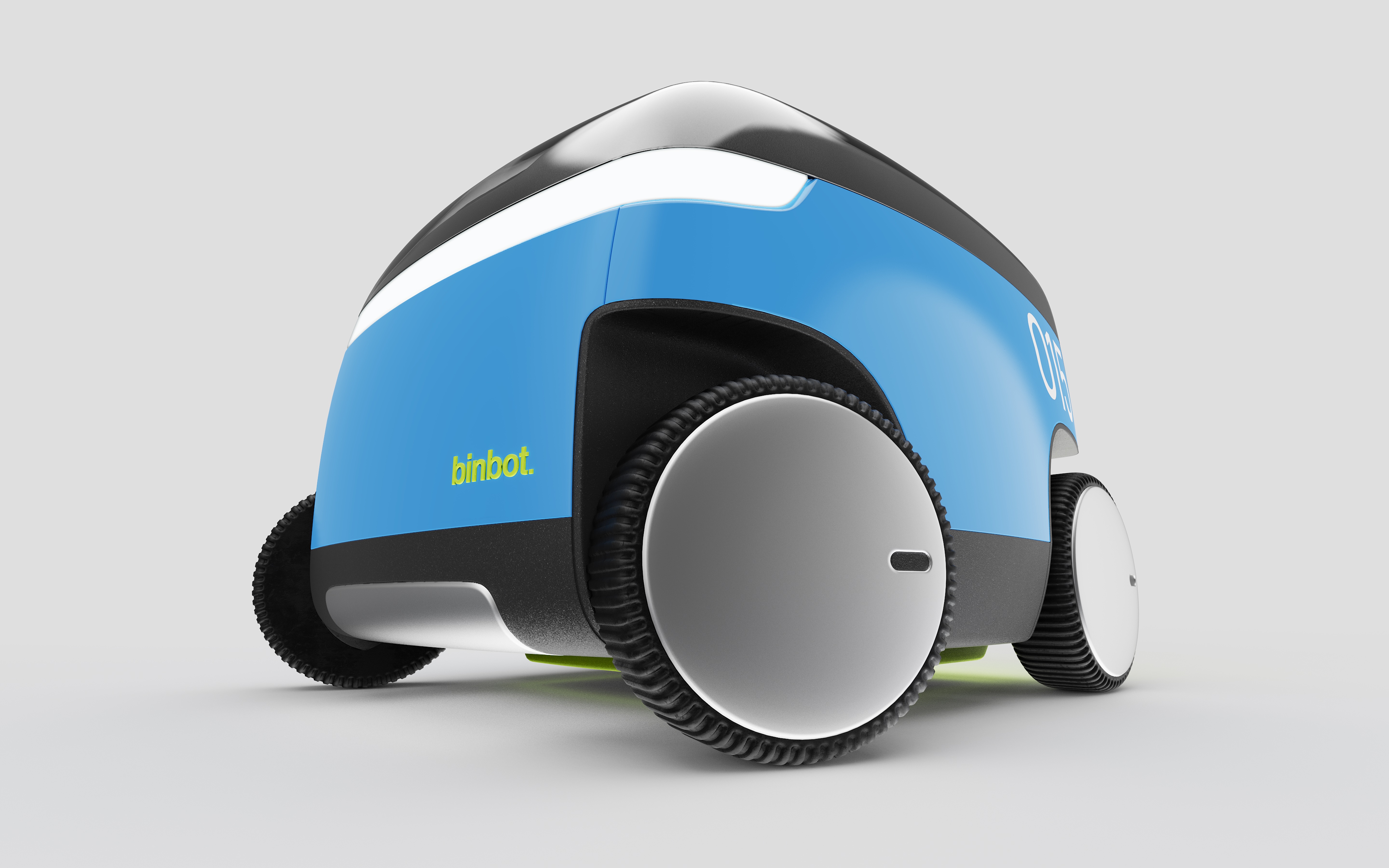

Binbot
Modular Last-Mile Delivery System
Last-mile delivery wasn't designed as a system. One person picks and packs the order. Another drives it across town. Meanwhile, the customer plans their day around being home, or risks missing the deliver window. Each link was built for a different era, and it shows: narrow delivery windows, peak-hour bottlenecks, melted groceries, and a model that works, but at a cost that keeps delivery a premium service rather than a default one.
Binbot doesn't aim to replace every kind of delivery. Same-day, on-demand, hand-it-to-me orders are well-served by what already exists. The opportunity is everything else: the groceries you'd queue up the night before, the household supplies on a recurring cadence, the orders that don't need to arrive in the next twenty minutes. Most of that volume sits in off-peak hours, where automation can run more cheaply and more often than a driver can.
The core idea is to separate the bin from the bot. Partner retailers — a neighborhood Whole Foods, a Walgreens, a Costco, or a condo building offering delivery as an amenity — pick and pack orders into sealed, standardized bins. A Binbot slides beneath the bin, lifts it, and drives the short distance to the customer's designated drop point. It squats, releases the bin, and leaves. When the bin is empty, a ping returns a bot to retrieve it and put it back in circulation.
Customers don't need to be home, don't need to schedule around a window, and don't need to meet a robot. The bin is full when they need it to be. Binbot is patent pending, owned by Whipsaw Inc. Inquire to find out more.
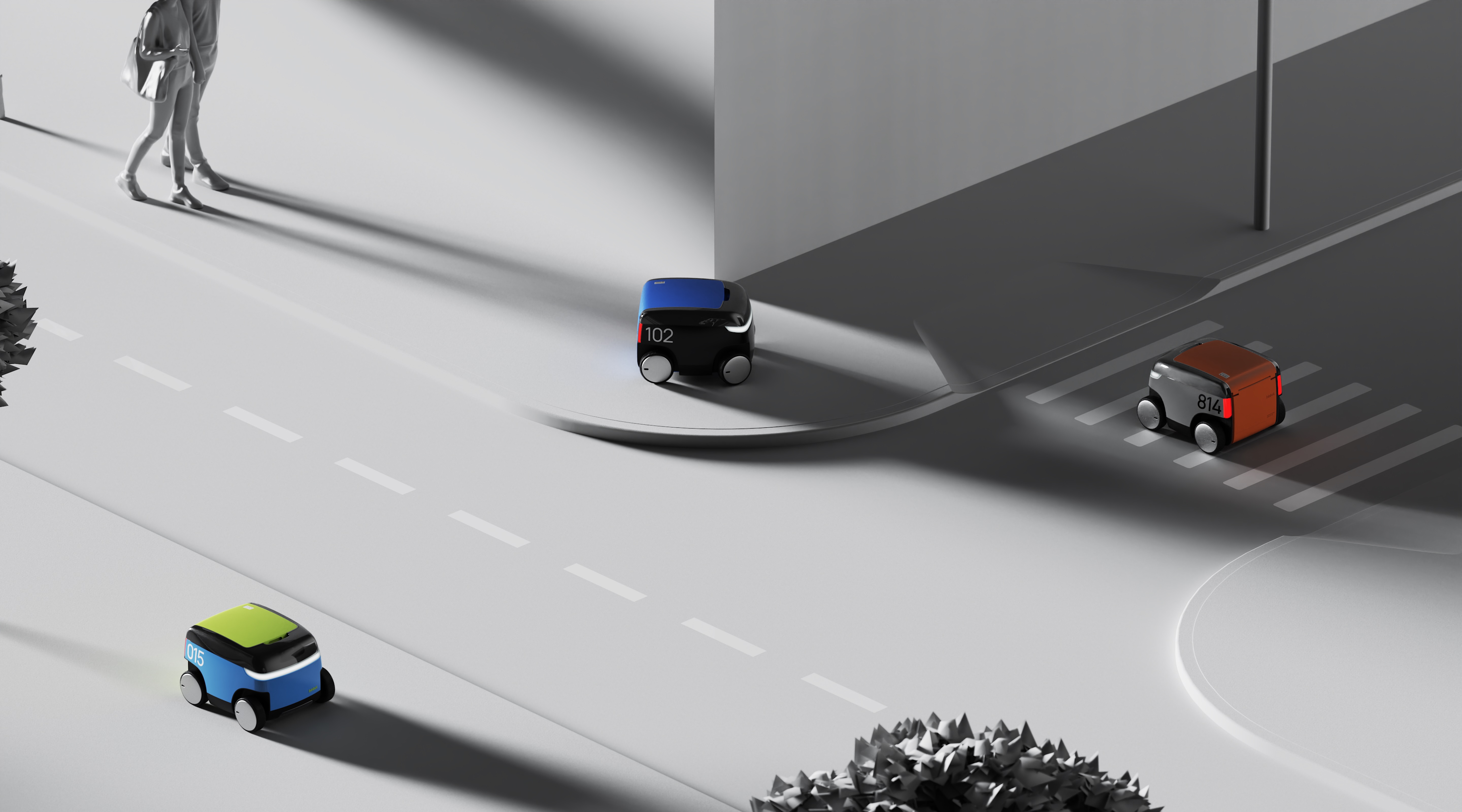
A system, not a vehicle.
Most delivery robots are autonomous couriers: one bot, one package, one trip. Binbot is a network. Bins, bots, fulfillment partners, and drop locations operate as one platform. Decoupling the container from the carrier lets bots route independently of orders and absorb peak demand without idling.
Designed for a community.
Binbot isn't trying to map a city. It works within a few mile radius of a retailer, short enough for a modest battery and simple routing. The constraint is the feature. A fleet that belongs to a Whole Foods, a Walgreens, or an Ace Hardware.
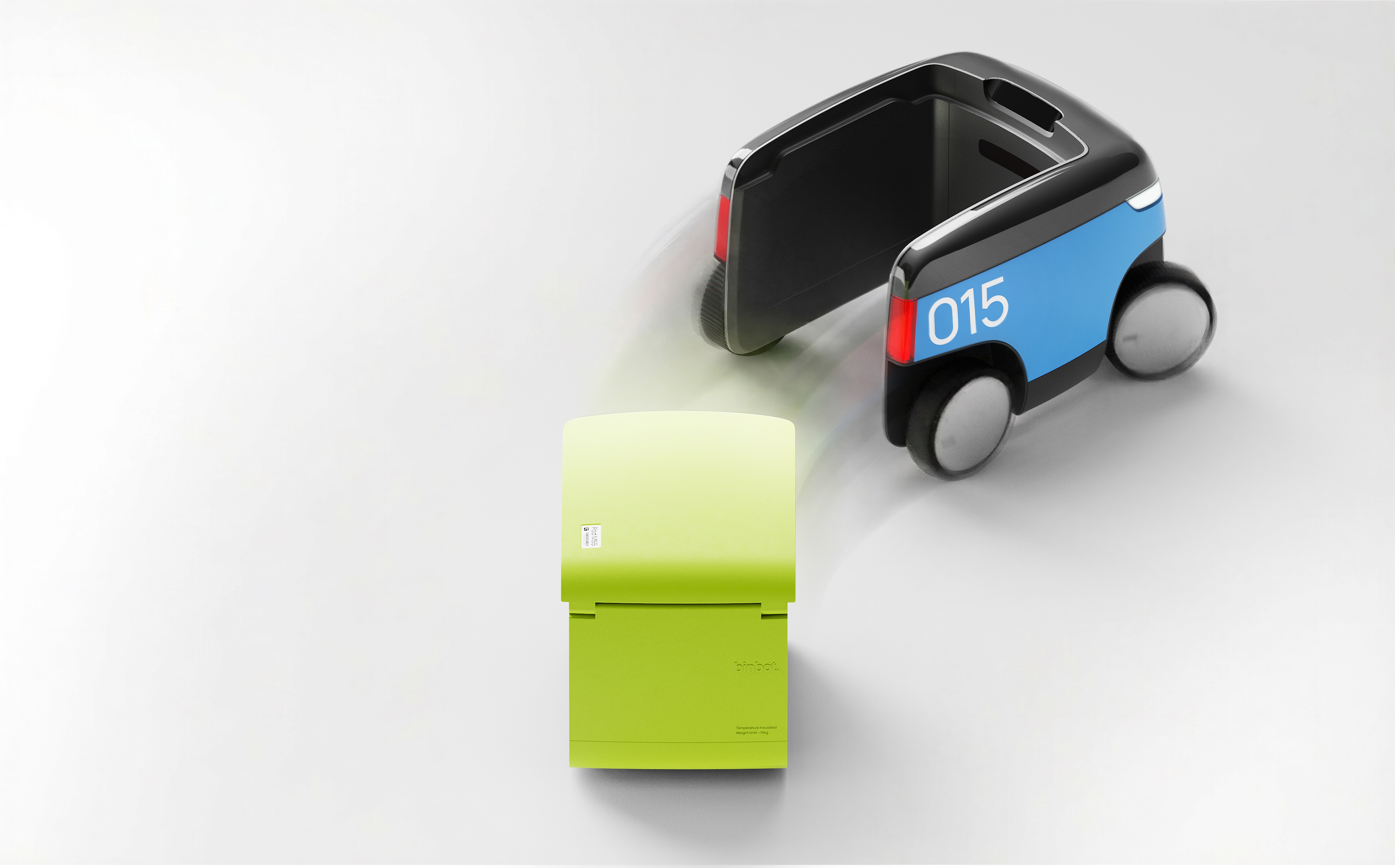
Approachable, not anthropomorphic.
No face, no eyes, no nameplate. A glossy black visor wraps the perimeter, hiding cameras and sensors behind one continuous surface. Rounded corners and a low stance keep Binbot friendly without performing personality. A considered object, not a character.
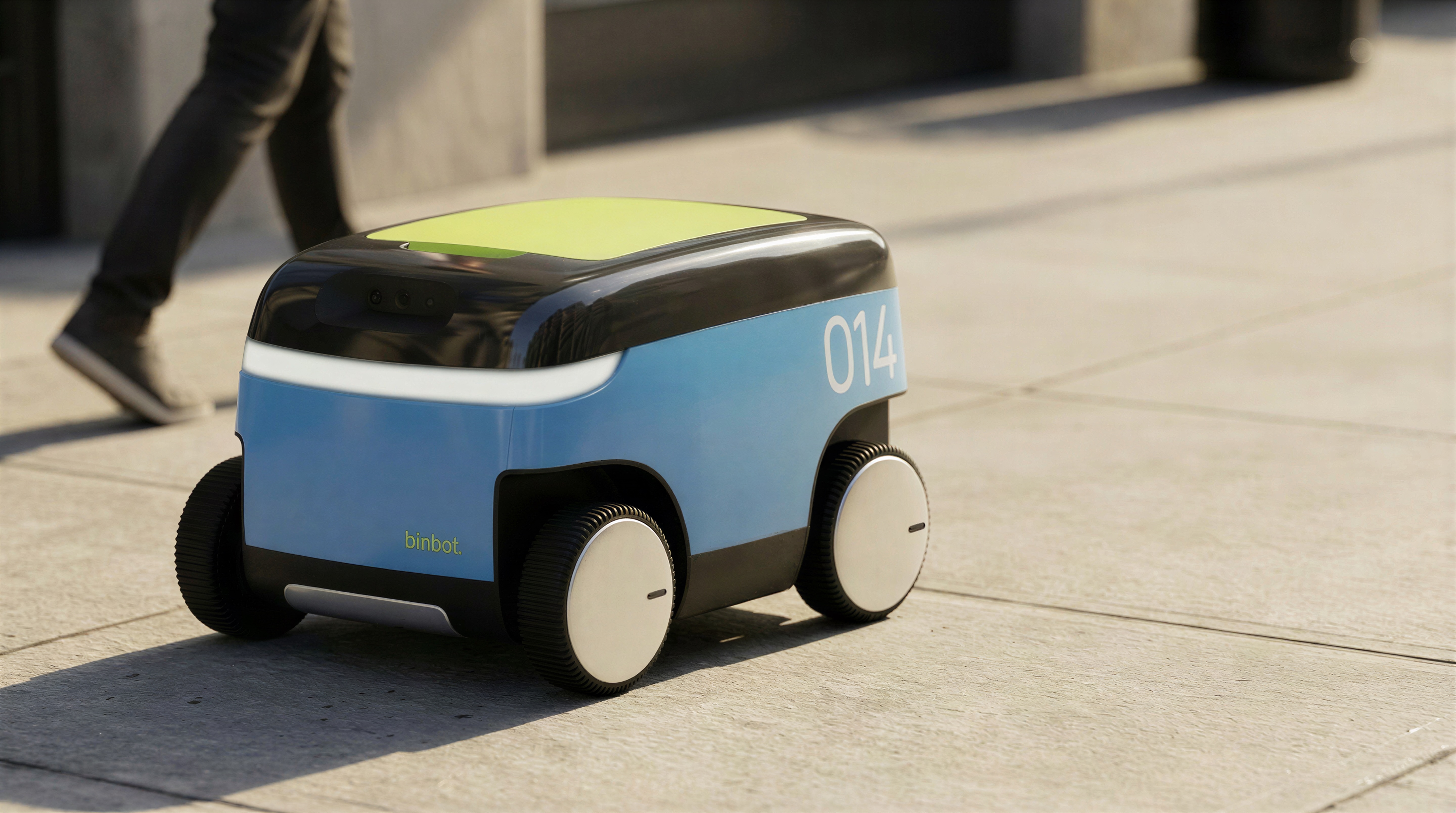
The lift is the interaction.
The chassis wraps around the bin rather than sitting beneath it, keeping weight low and the profile compact. It drops, backs under the bin's rim, and rises. Four small tabs catch matching recesses; gravity does the rest. No dock, no platform, no handoff.
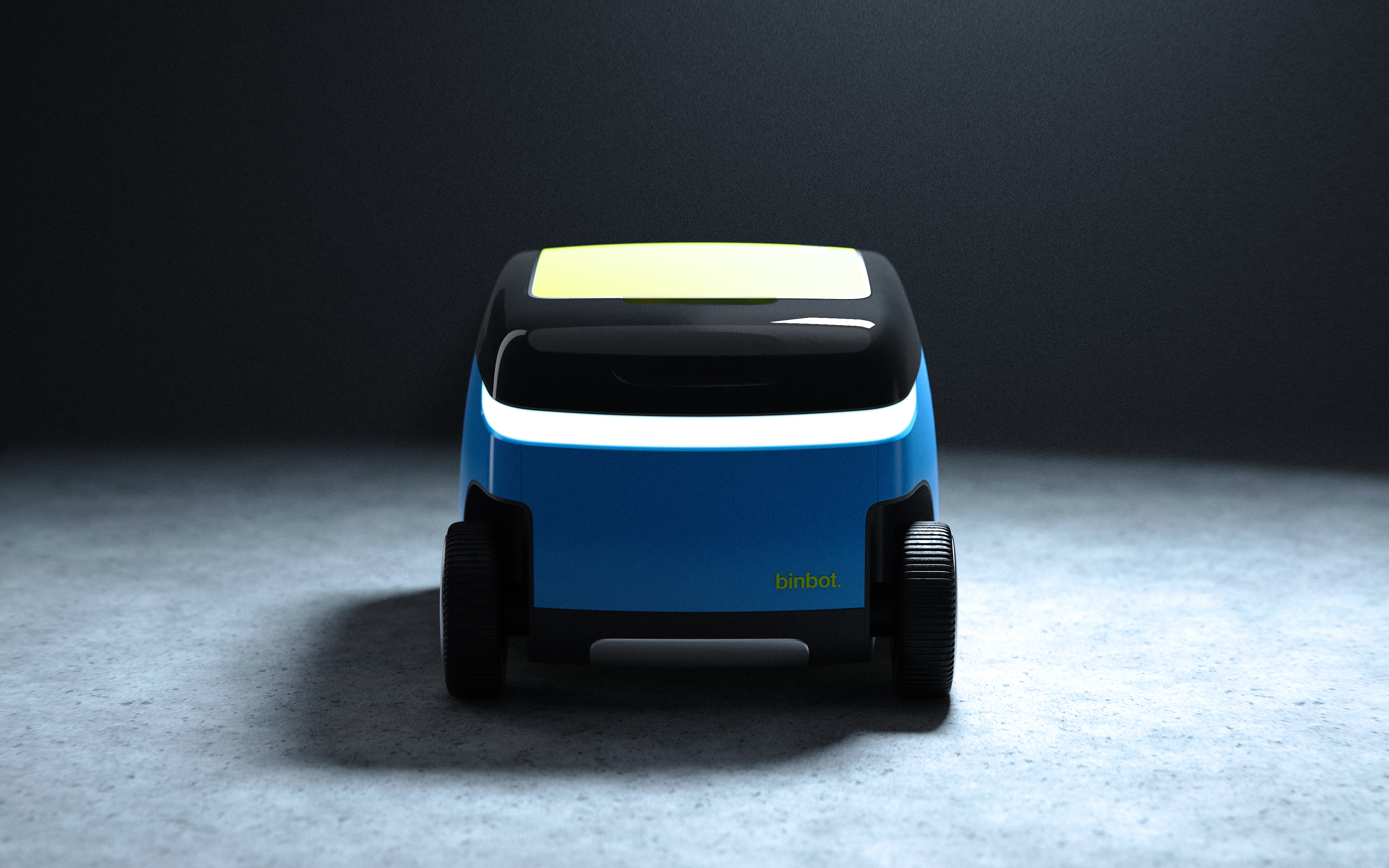
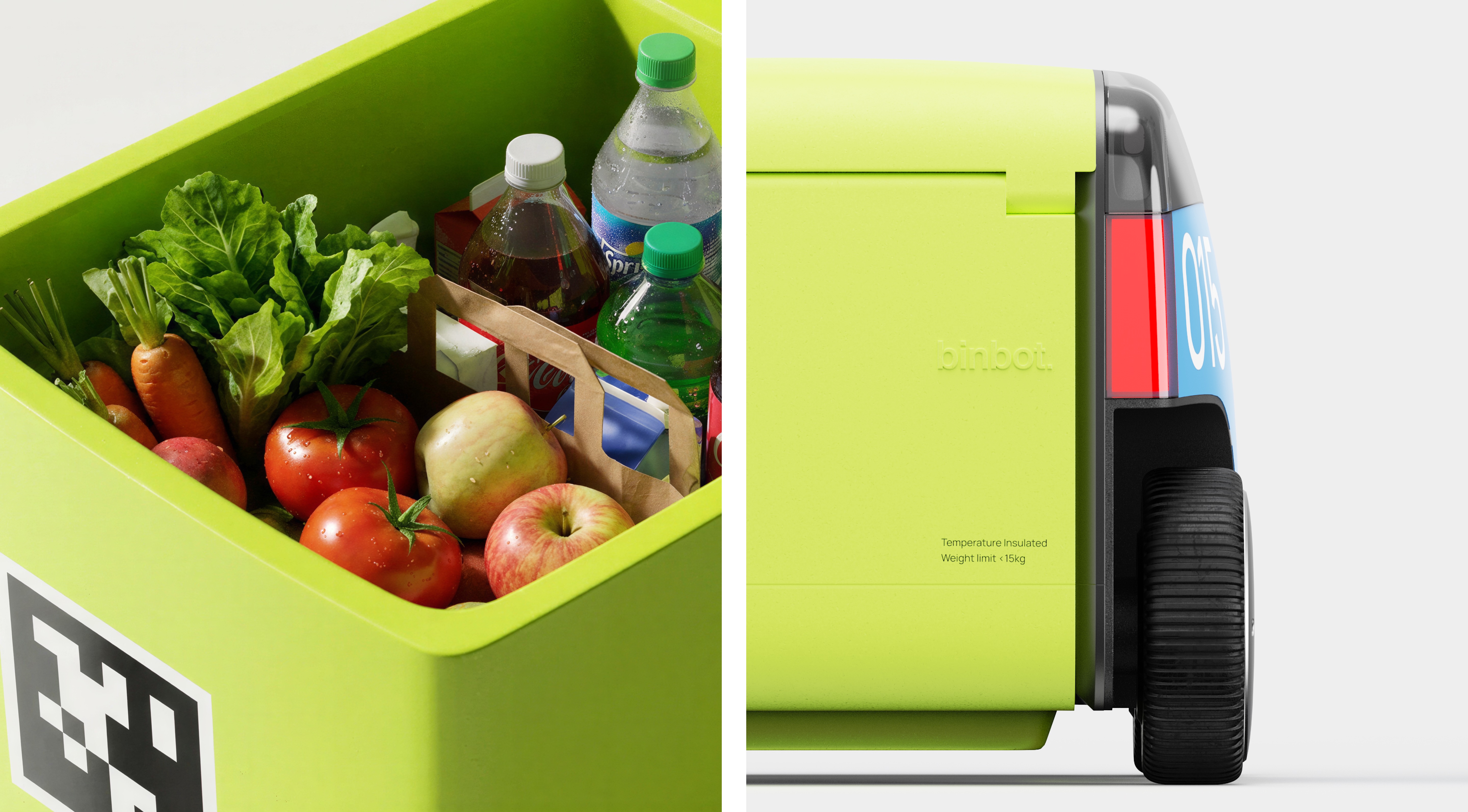
The bin is the brand.
Sized for two standard grocery bags, the bin is a standalone vessel that lives at the customer's home between deliveries. Variants are purpose-built for grocery, hardware, and more, each with a pop of color signaling what's arrived. The bot leaves; the bin stays.
Video with default size
Video with full width


Statement Headline
The rich text element allows you to create and format headings, paragraphs, blockquotes, images, and video all in one place instead of having to add and format
Statement Headline
A rich text element can be used with static or dynamic content. For static content, just drop it into any page and begin editing. For dynamic content, add a rich text field to any collection and then connect a rich text element to that field in the settings panel. Voila!
Quote text 1
Quote text 2
Headings, paragraphs, blockquotes, figures, images, and figure captions can all be styled after a class is added to the rich text element using the "When inside of" nested selector system.
Video with default size
Video with full width
Statement Headline
The rich text element allows you to create and format headings, paragraphs, blockquotes, images, and video all in one place instead of having to add and format
Statement Headline
A rich text element can be used with static or dynamic content. For static content, just drop it into any page and begin editing. For dynamic content, add a rich text field to any collection and then connect a rich text element to that field in the settings panel. Voila!
Quote text 1
Quote text 2
Headings, paragraphs, blockquotes, figures, images, and figure captions can all be styled after a class is added to the rich text element using the "When inside of" nested selector system.
Services
Industrial Design
Product Design Ideation & Refinement
Human Factors & Ergonomics
Color, Materials, Finish & Detail Specification
Brand Development
Target Audience Mapping
Brand Strategy
Brand Identity
Voice & Narrative
Physical & Digital Brand Language
Awards
No Awards

%202-min.jpg)


.svg)
.svg)
