


AI-Enabled Research and Validation
AI-powered research that combines qualitative depth with quantitative scale to validate product concepts, uncover user needs, and support confident design decisions.
4
How We Work
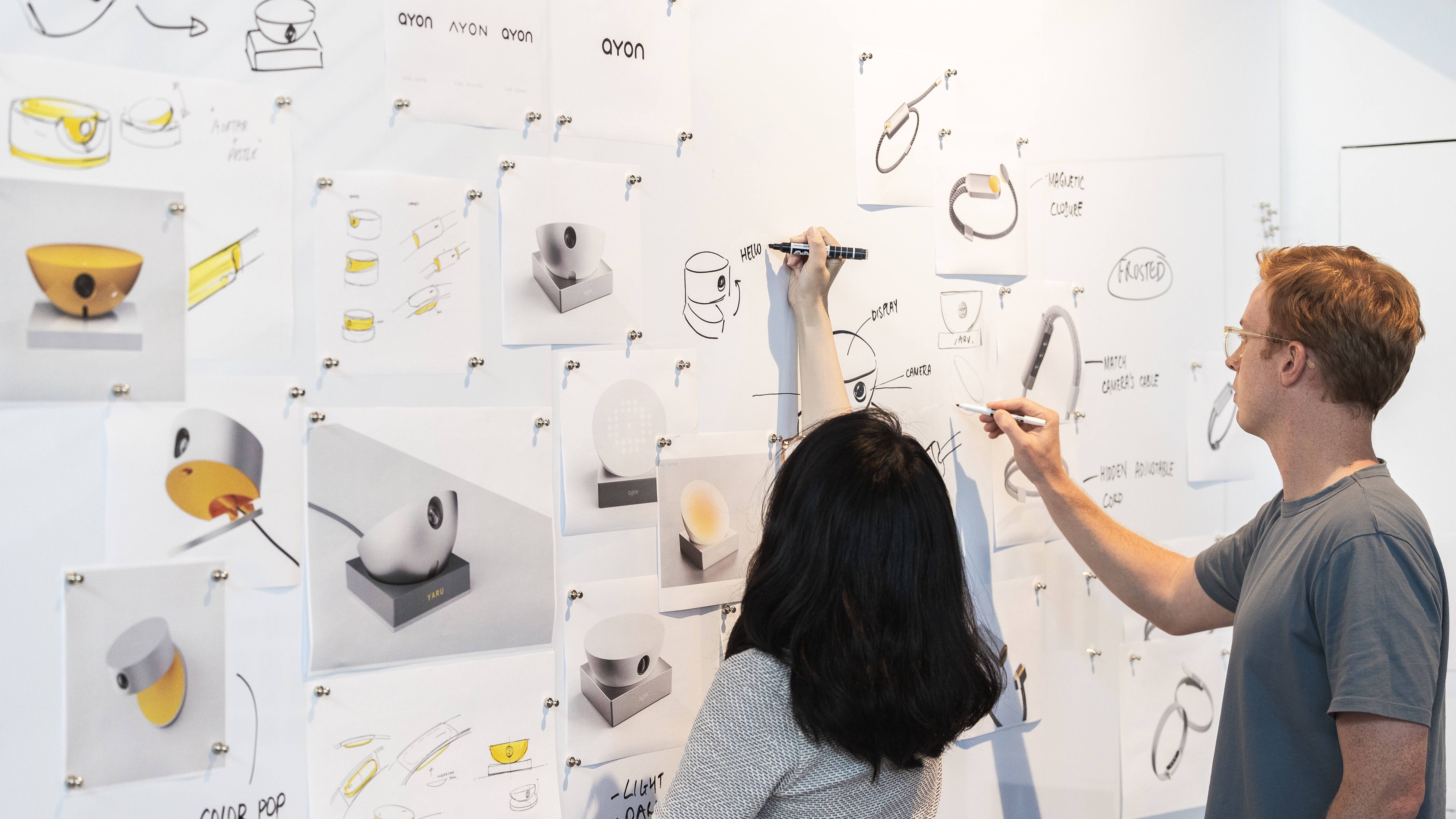
Whipsaw combines AI-enabled research methods with human research expertise to help teams investigate product opportunities and validate ideas at scale. We use structured conversations with verified participants, guided by virtual researchers that probe responses, explore underlying motivations, and surface tensions that traditional surveys often miss. A Whipsaw strategist frames the research question, develops the protocol, and interprets the findings in the context of the decision at hand. This approach helps teams gather richer feedback from larger samples, often within a shorter fielding window, without losing sight of the human insights behind the data.
Understanding AI-Enabled Research and Validation
AI-enabled research and validation uses artificial intelligence to support the collection, exploration, and analysis of user feedback, helping teams understand what people think, why they think it, and how those insights should inform product decisions.
By combining conversational research with broader participant samples, teams can explore qualitative questions while gathering evidence across more people than traditional one-to-one interviews typically allow. The goal isn't simply to collect more responses. It's to uncover meaningful patterns, challenge assumptions, and evaluate product concepts with evidence that supports the next decision.
Why AI-Enabled Research Matters
Product decisions often depend on understanding both the scale of a problem and the reasons behind it. Traditional surveys can reveal broad patterns, but structured questions may miss the motivations, contradictions, and unexpected concerns that shape user behavior. AI-enabled research helps bridge that gap by probing responses and following relevant lines of inquiry across larger participant groups.
For product teams, this can mean faster feedback on early concepts, a clearer view of user needs, and better-informed decisions about what to develop, refine, or validate next. The value comes from combining reach with interpretation, not treating automated analysis as a substitute for research judgment.
Whipsaw’s Expertise
Whipsaw approaches AI-enabled research as a decision-making tool, not just a faster way to gather feedback. Our strategists define the questions that matter, design research protocols around specific product decisions, and interpret findings in the context of user needs and business objectives.
Virtual researchers can conduct structured conversations at scale, probe participant responses, and surface areas of tension that deserve closer attention. Human expertise remains central to framing the study, evaluating the findings, and translating evidence into actionable product direction. This combination helps teams move beyond surface-level opinions and build a stronger understanding of what users need before committing to design and development.
For brands like


FAQ
What is AI-enabled research and validation?
AI-enabled research and validation uses artificial intelligence to conduct or support research conversations, explore participant responses, identify patterns, and evaluate product concepts. It can help teams combine qualitative depth with feedback from larger participant samples.
How does AI-enabled research differ from traditional surveys?
Traditional surveys typically rely on predefined questions and answer options. AI-enabled conversational research can probe participant responses with follow-up questions, helping uncover motivations, contradictions, and context that fixed-response surveys may overlook.
Can AI-enabled research provide qualitative insights at scale?
Yes. AI-guided conversations can explore open-ended responses across larger participant groups than conventional one-to-one interviewing usually allows. The quality of the insights still depends on participant selection, research design, questioning, and expert interpretation.
How does Whipsaw use AI in product research?
Whipsaw uses AI-enabled research to explore user needs, investigate product opportunities, and validate concepts. Strategists frame the research questions, develop the protocol, and interpret the findings so the results support specific product and design decisions.
When should a team use AI-enabled research and validation?
It can be useful when teams need to explore user needs, test early product concepts, investigate assumptions, or gather richer feedback from a broad participant group. The research method should match the decision being made, the audience, and the level of evidence required.
Does AI replace human researchers?
No. AI can help conduct structured conversations and explore responses at scale, but human researchers remain important for defining the right questions, designing the study, assessing the evidence, and translating findings into sound product decisions.
Next Service
Manufacturing Partnerships
Manufacturing partnerships is the work of finding and vetting the right manufacturers and specialty vendors to build a product at the quality, volusme, and geography it needs. We help clients identify and evaluate contract manufacturers, OEMs, and specialty vendors, basing recommendations on capability fit, quality track record, volume alignment, and geography. We stay involved through implementation, so design intent carries all the way through DFM, DVT, and PVT.
13
Packaging Design
Packaging is the first physical touchpoint with your customer. We design from the inside out — structural exploration, unboxing experience mapping, brand integration, graphic design, and materials specification. Our work includes 3D modeling, physical prototyping, dieline development, sustainability analysis, and vendor coordination through production.
12
Design for Manufacturing
Design for manufacturing is the work of turning an approved concept into a production-ready product that's engineered for performance, cost, and scale. Our DFMA work includes part consolidation, wall-thickness analysis, snap-fit and fastener strategy, tolerance stack-up review, and material selection matched to the appropriate process. We also define manufacturing strategy and find cost savings, all while protecting design intent and reliability. We've contributed to more than 700 patents across our portfolio.
11
Color, Materials, Finish
Color, materials, and finish design is the work of specifying how a product looks and feels to the touch, documented precisely enough for manufacturing. We explore and specify everything from soft-touch coatings and anodized metals to textured polymers and sustainable bio-materials. Our CMF specs include material callouts, texture references, Pantone and RAL standards, and finish tolerances, so the intent survives the trip to the factory floor. Sustainability factors in here too: we help clients choose recycled and bio-based materials and design for disassembly and recyclability, weaving those decisions in early rather than bolting them on at the end.
10
Design Refinement
Design refinement is the phase where a chosen direction is sharpened into a fully resolved product, detail by detail. Once a concept is selected, we perfect the form and surfacing, lock the scale and placement of branding elements, and resolve the small decisions that separate a rough idea from a finished product. Renderings and CAD get updated to reflect every change.
9
Creative Engineering
Hardware interaction design is the design of how a product feels to operate, the click of a button, the swing of a lid, the way a light tells you what's happening. We design and prototype hardware interaction states, including buttons, switches, lights, dials, and haptic feedback, iterating hands-on until each one feels right. You can't fully judge this on a screen, so we build it, hold it, and tune it until the interaction feels intentional.
8
Robotics & Autonomous System Design
Robotics and autonomous system design is the design of machines that move, sense, and act on their own, and do it in a way that people can work alongside comfortably. We design the physical form, human factors, and interaction behavior of robotic and autonomous products. These machines have to perform, and they also have to be legible to the people around them, so we design how a robot signals intent and hands off control alongside the ergonomics, durability, and serviceability that decide whether it holds up in the real world.
7
Hardware Interaction Design
Hardware interaction design is the design of how a product feels to operate, the click of a button, the swing of a lid, the way a light tells you what's happening. We design and prototype hardware interaction states, including buttons, switches, lights, dials, and haptic feedback, iterating hands-on until each one feels right. You can't fully judge this on a screen, so we build it, hold it, and tune it until the interaction feels intentional.
6
Model-Making & Prototyping
Model-making and prototyping are the practices of building physical versions of a product at every stage of design to test form, function, and feel before committing to production. We build models in-house, from quick foam studies and 3D-printed concepts to high-fidelity appearance prototypes, using FDM, SLA, and SLS printing, CNC machining, and painted appearance models. A physical model settles debates faster than any slide, and it surfaces the problems that only show up once something becomes real.
5
Human Factors & Usability
Human factors and usability is the discipline of designing products around the real bodies, abilities, and behaviors of the people who use them, and testing with real people throughout the process. We work with full-scale models in our own shop, through anthropometric analysis, grip and reach studies, and accessibility evaluations, alongside usability sessions, A/B preference testing, and observational studies in real-use environments. Decisions are made based on what people actually do, not on what the team assumes, and catching a problem in a foam model is much cheaper than catching it in a customer's hands.
3
AI-Enabled Product Design
AI-enabled product design is our use of AI tools inside the design process itself, to explore more directions and visualize them faster than traditional methods allow. We use it to generate, iterate on, and render concepts at a pace that lets us see ideas early and in greater numbers. More iterations in less time means more chances to find the right direction, and tighter feedback loops at the stage when changes are cheapest.
2
Concept Ideation
Concept ideation is the earliest phase of product design, in which a broad opportunity becomes a set of possible directions. This is divergent work. We push for range before resolution, generating a high volume of ideas through fast sketching, 3D CAD, and rapid rendering, so concepts can be seen and reacted to almost as quickly as they're conceived. Chase the unexpected directions and find the genuinely innovative idea before the obvious one takes hold.
1


