


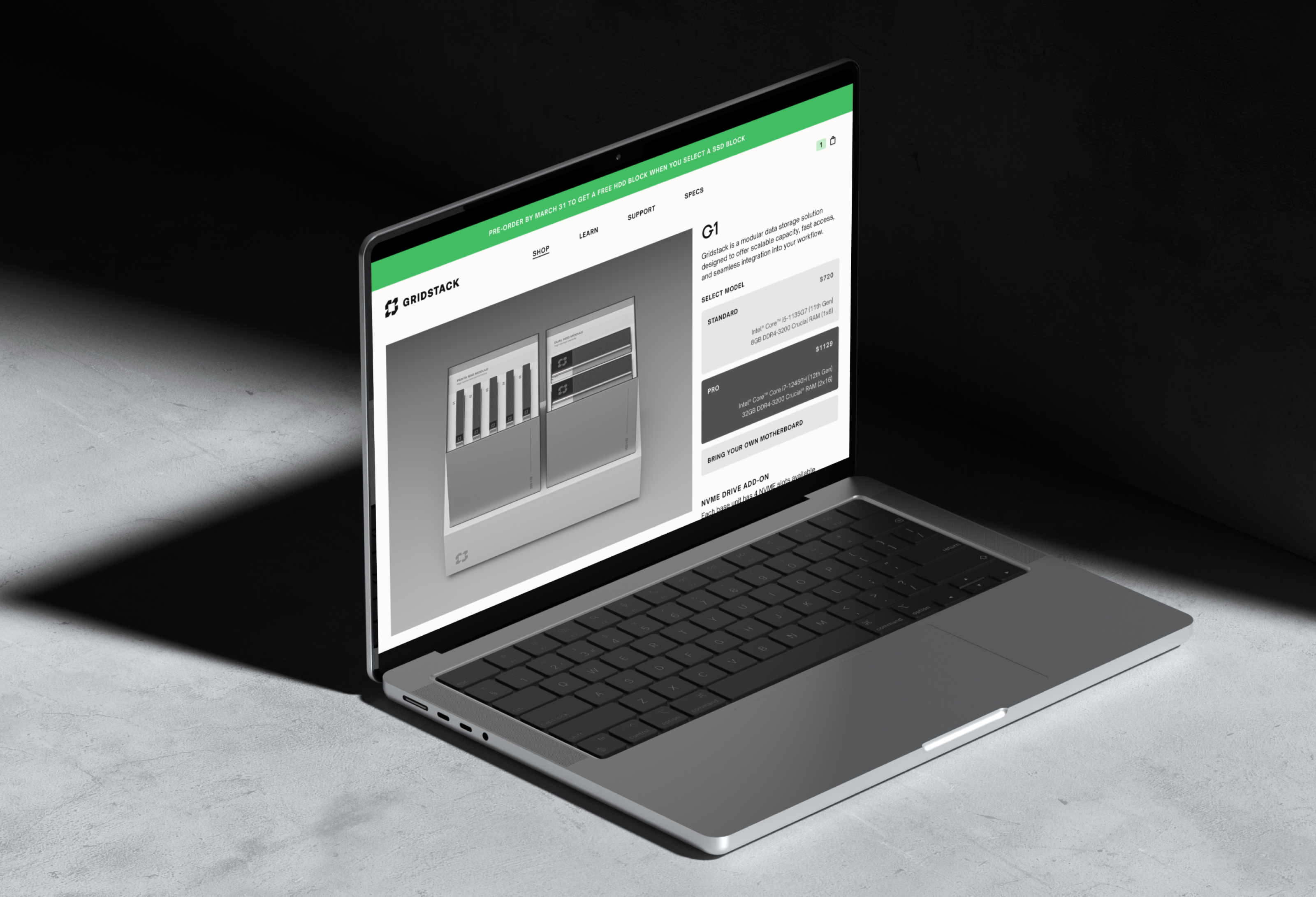
Advanced visuals, page performance, and true maintainability can coexist on Webflow—if you treat the site like a system, not a pile of pages. For Gridstack, we paired a systemized Webflow build with a fully custom Shopify integration so the brand experience stays premium while operations stay reliable. The result is a storefront that looks bespoke, runs fast, and updates without developer hand-holding.
Webflow isn’t just a canvas—it’s a way to encode quality at speed. We implement design tokens (color, type, spacing) and components (hero, proof bands, product cards, pricing) so improvements propagate globally.
All factual content—features, specs, FAQs, testimonials, comparison blocks—lives in the CMS, which means editors can publish confidently while the system enforces semantics, accessibility, and style. Performance is built in: semantic HTML, restrained scripts, disciplined media, and responsive patterns that keep Core Web Vitals green across devices.
We also use light-loading text animations that add narrative clarity: short headlines reveal the pace of the story without hijacking scroll or taxing the GPU. Typography remains semantic and indexable, so the message is accessible and SEO-friendly.
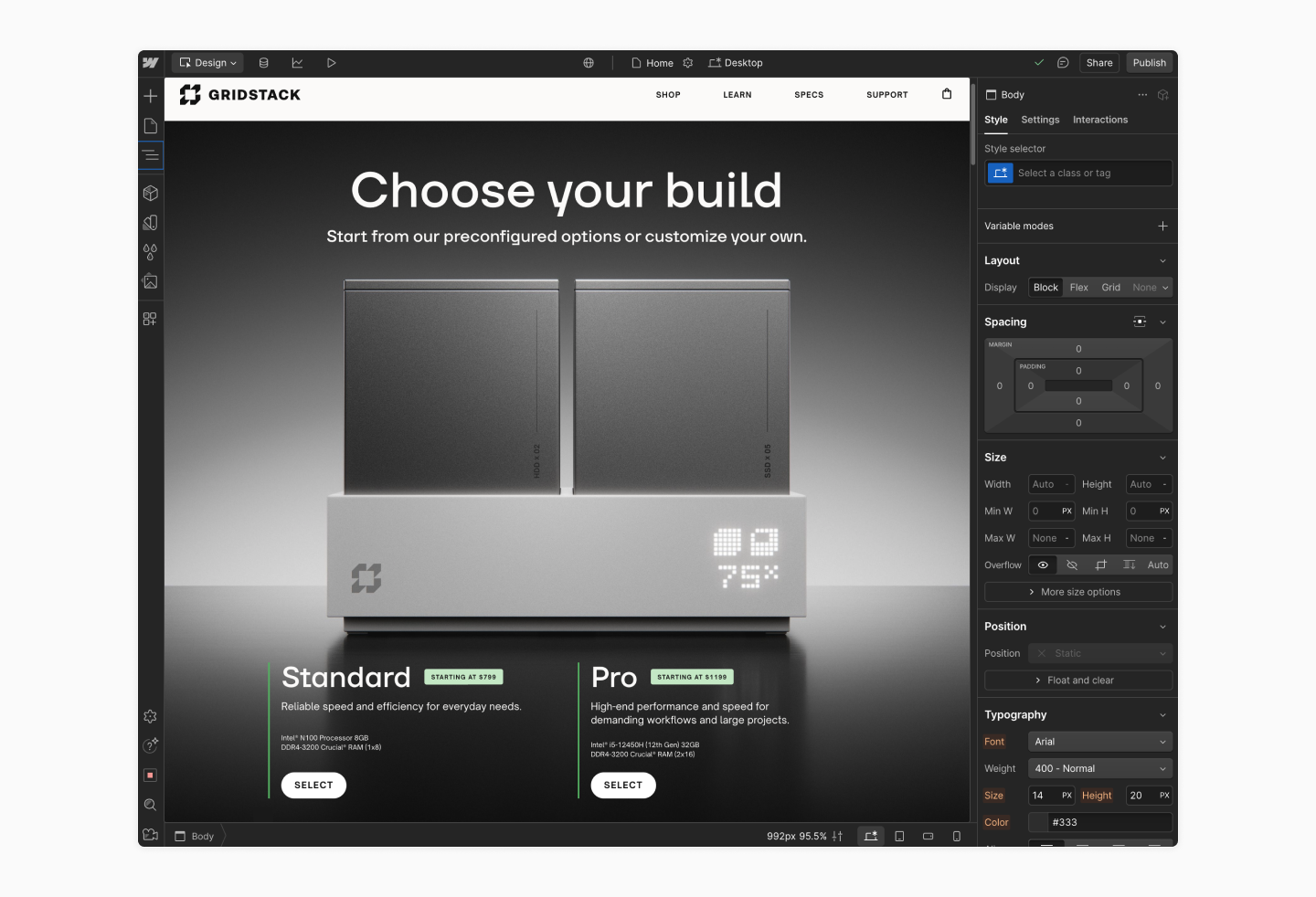
When Gridstack approached us, the product vision was already bold: modular data storage for professionals who value performance and simplicity. The website had to match—fast, flawless, and completely custom.
Our goal wasn’t to “hook up Shopify.” It was to architect a unified system where Shopify owns product truth and checkout, while Webflow delivers a seamless, brand-led front-end. Two platforms, one engine—always in sync, always performant, and capable of handling complex, configurable variants without manual updates.
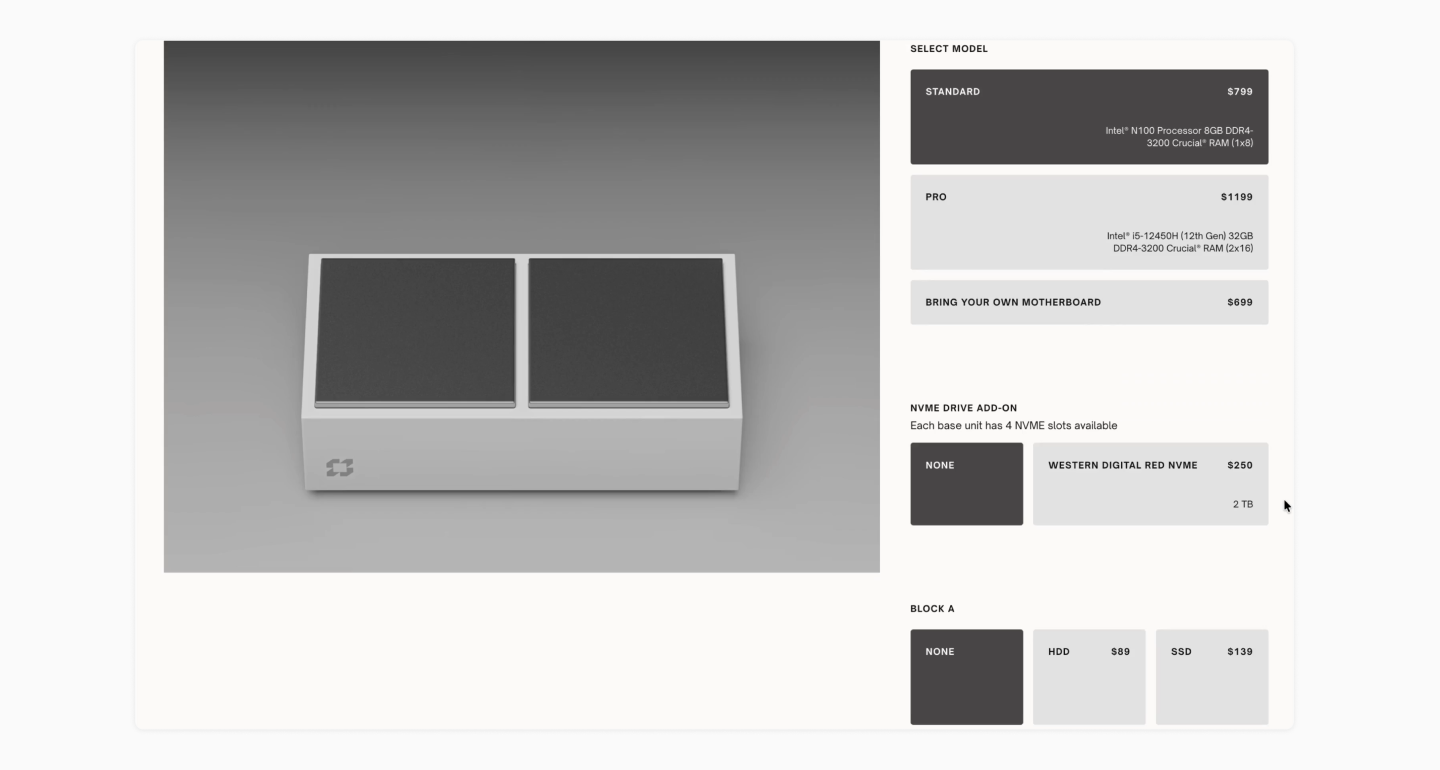
Gridstack isn’t a single SKU; it’s a multi-layered hardware system—three main families with rules, interchangeable modules, and configuration paths. We built a custom variant engine in Webflow that mirrors Shopify's multi-layer variant structure. As visitors select options, the UI resolves the correct variant, applies rules, updates price and media, and prepares the cart—visually 100% custom in Webflow, functionally aligned with Shopify.
Most hybrid builds fail because product data goes stale. We engineered a real-time data bridge so changes in Shopify—prices, inventory, images, even new variants—appear on Webflow instantly, without pressing Publish, touching the Designer, or breaking the UI. Shopify remains the single source of truth; Webflow always reflects it. That’s why the system scales cleanly and never drifts.
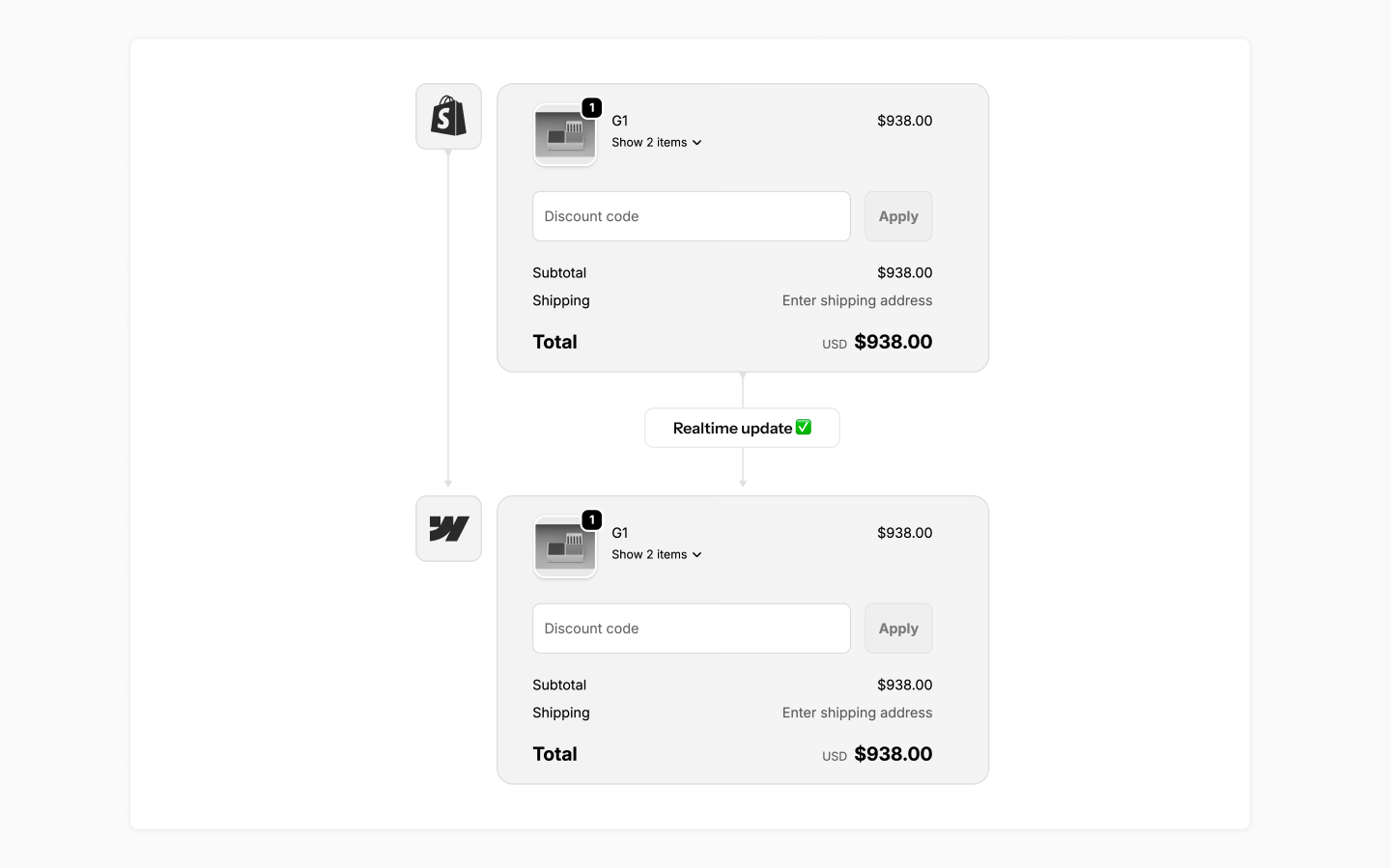
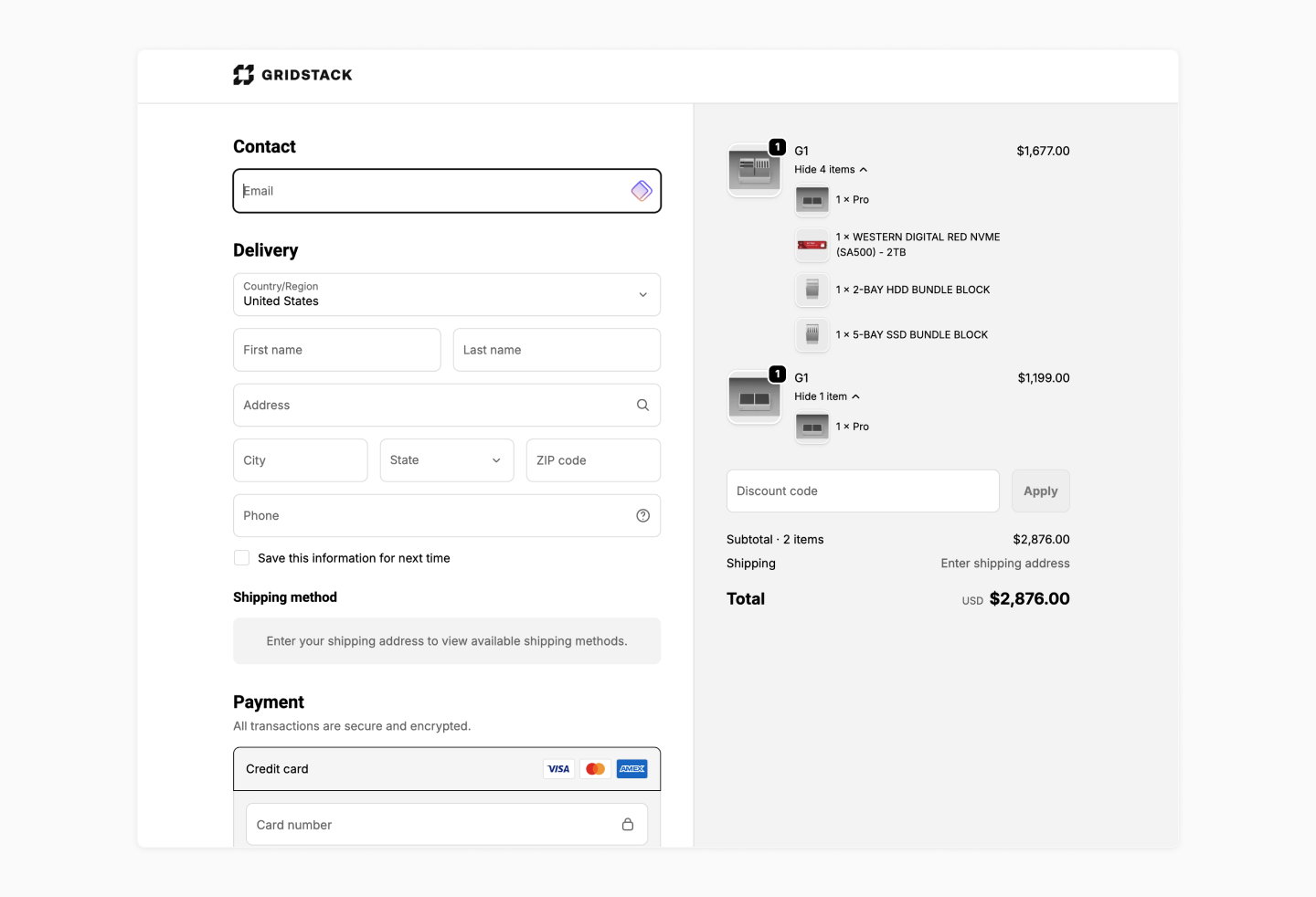
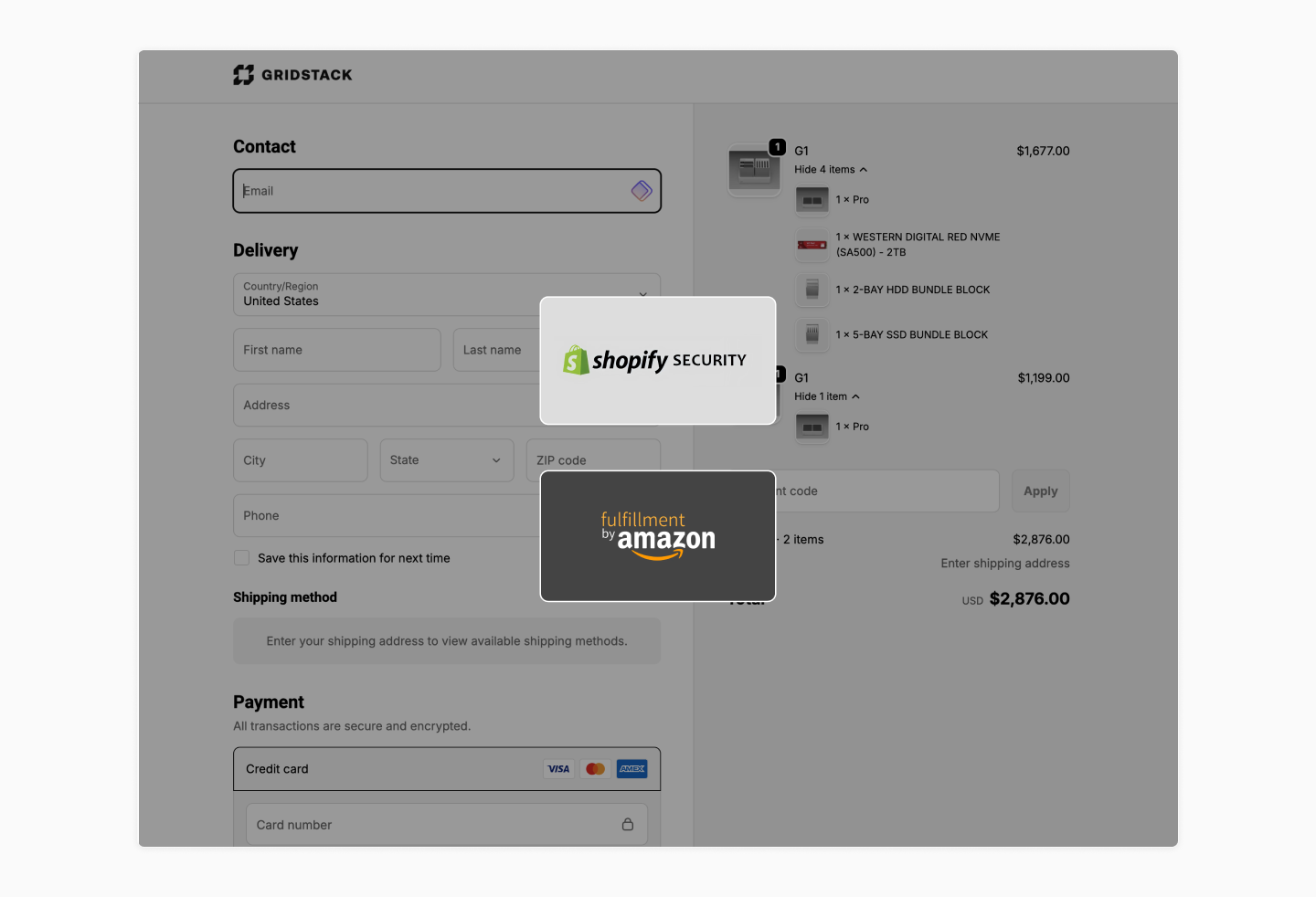
The entire buying experience takes place inside Webflow, but every purchase is completed on Shopify Checkout—fast, battle-tested, and PCI-compliant. When a user finalizes a configuration, we pass the exact variant, pricing, and selling-plan data to Shopify, sync the cart/session, and hand off to checkout with everything preloaded. Users feel continuity; ops get reliability.
Transactional emails (orders, pre-orders, cancellations) are handled natively by Shopify—no brittle scripts or third-party automations. And because Gridstack fulfills via FBA, inventory changes flow to Amazon → Shopify → Webflow in real time. The team manages the catalog and logistics where they already work; the site stays accurate without developer intervention.
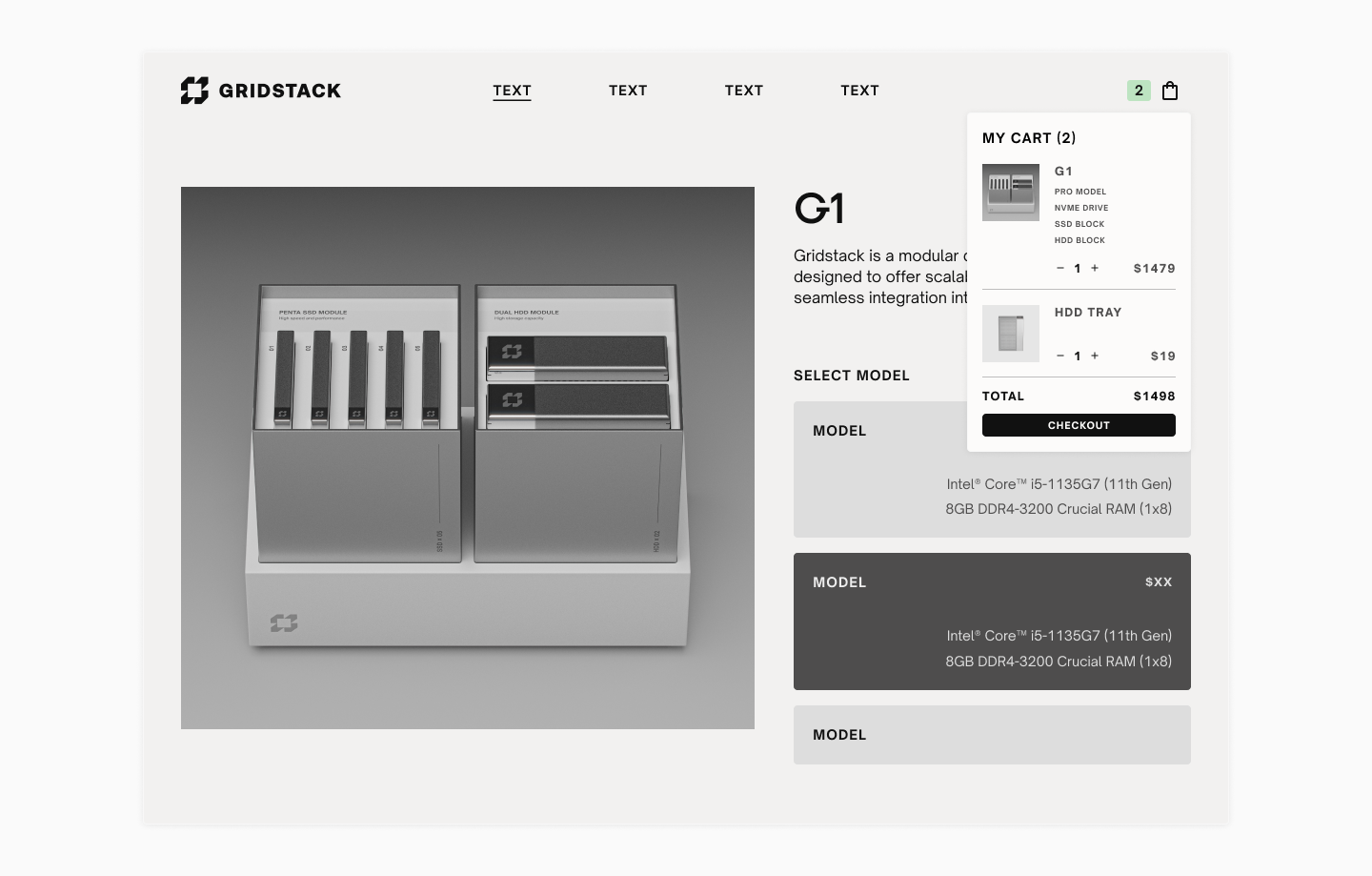
Visual craft means nothing if the path to purchase is clumsy. Gridstack’s site treats the website as a product surface: clear value, proof where it matters, and effortless actions. Category and product views are scannable; filters help visitors pick products by preference (dimensions, specs, use-case) without dead ends; micro-interactions guide attention without slowing the page. Add to cart feels instant and preserves state across pages; nothing shifts or jumps when the cart opens.
Behind the scenes, Webflow controls the brand and content velocity; Shopify handles catalog truth, promotions, taxes, and secure payments. That split keeps analytics stable and checkout trustworthy, while marketing can still ship landing pages and campaigns at pace.
Everything is engineered to be fast to use and easy to find. We honor reduced-motion preferences, keep decorative media out of the accessibility tree, and structure content with semantic headings and labels. Template-level SEO and AEO are wired to CMS fields: titles, meta, Open Graph, and structured data (Organization, Product, FAQ, where appropriate) are generated consistently. Short, self-contained definition blocks and FAQs give AI and search features clean, citation-ready passages—without compromising tone or visual polish.
A single clever page doesn’t make a scalable site; a system does. Tokens and components encode brand decisions once, so when a pattern performs better—say, a proof band that lifts CTR—we update the component and roll it out site-wide in minutes.
CMS modeling mirrors the real content universe, so new pages inherit semantics, styles, and SEO/AEO automatically. Roles, staging, and scheduled publishing let editors move fast with guardrails, while engineering focuses on integrations and data—not layout chores.
This is how you take a custom Webflow website to the next level: design craft backed by systems thinking, a seamless Webflow/Shopify bridge, and the operational reality that teams can run every week.
Share this article


.svg)
.svg)