


Hardware design sits at the intersection of engineering, industrial design, software, manufacturing, and human experience.
The strongest hardware products are rarely the result of solving a single technical problem. They emerge when architecture, functionality, physical form, usability, manufacturability, and business requirements are considered as one connected system.
For companies developing a new physical product, that distinction matters. A technically functional prototype is only the beginning. The real challenge is turning an idea into hardware that people understand, want to use, can manufacture reliably, and can support as the product evolves.
At Whipsaw, we approach hardware as part of a larger product system. Our work spans industrial design, product development, design engineering, prototyping, human factors, physical UX, and manufacturing strategy, allowing the technical and experiential sides of a product to develop together rather than as disconnected stages.
Hardware design is the process of defining, developing, prototyping, testing, and preparing the physical technology that makes a product function. Depending on the product, this can include electronic architecture, circuit and PCB design, component selection, embedded hardware, mechanical systems, enclosures, sensors, interfaces, power systems, thermal considerations, and design for manufacturing.
Hardware design is broader than PCB design or electrical engineering alone. A successful physical product has to work as a complete system. Components need to fit within the physical architecture, electronics need to work reliably within their environmental constraints, interfaces need to communicate clearly with the user, and the resulting product needs to be manufacturable at an acceptable cost.
That systems perspective becomes particularly important as products become more connected and computational. A device may include sensors, processors, displays, motors, wireless connectivity, software, and a companion digital experience, all of which have to work together. The physical product becomes the interface between complex technology and the person using it.
This is why hardware design increasingly overlaps with product design. The goal is not simply to make the technology function. It is to determine how that technology should exist in the real world.
A common mistake in hardware development is to separate engineering from the rest of the product experience. Engineering determines what can be built, while design determines what the product should feel like. In practice, the two questions are inseparable.
Every physical decision affects the experience. The location of a button determines how naturally a user interacts with the product. The size of a housing affects ergonomics. Thermal requirements influence materials and form. Component placement can influence the shape of the enclosure. Manufacturing constraints can change the visual language of a product.
Whipsaw's approach reflects this relationship. Its physical product expertise combines industrial design with product development, human factors and ergonomics, model-making and prototyping, design engineering, sensor integration, physical UX, and technical strategy.
The result is a more integrated development process in which engineering decisions and design decisions inform one another rather than becoming expensive corrections later in development.
A hardware design process typically moves from product definition through architecture, development, prototyping, validation, and manufacturing. The exact sequence varies by product, but the most effective programs maintain a continuous relationship between technical feasibility, user needs, physical experience, and commercial requirements.
Before designing individual components, the team needs to understand what the product has to accomplish. Requirements may include functionality, performance, size, power consumption, environmental conditions, connectivity, regulatory requirements, target cost, expected production volume, and manufacturing constraints.
User and business requirements are equally important. Who will use the product? Where will they use it? What problem does it solve? What existing products are failing to address the opportunity?
These questions establish the criteria against which later hardware decisions can be evaluated. Without clear requirements, teams can spend significant time optimizing technical details that ultimately do not contribute to a better product.
System architecture translates product requirements into a technical framework. The team determines how the major subsystems will work together and begins defining components, interfaces, power requirements, processing, sensors, communications, mechanical constraints, and other dependencies.
At this stage, decisions about architecture can have consequences throughout the product. Choosing a particular processor, battery architecture, communication technology, or sensor may influence physical dimensions, thermal requirements, software development, sourcing, and manufacturing cost.
Good architecture therefore creates options rather than prematurely locking the team into one implementation.
With the architecture established, engineers can develop the electronic systems that make the product function. This can include circuit design, component selection, power management, signal management, connectivity, sensor integration, and other electrical requirements.
Component selection is particularly important because the best component on paper may not be the best component for production. Availability, lifecycle, cost, supply chain stability, performance, thermal characteristics, and integration requirements all need to be considered.
The printed circuit board provides the physical foundation for many electronic products. PCB layout determines how components, traces, connectors, and other elements are arranged and how electrical and mechanical requirements interact.
PCB design cannot always be treated as an isolated engineering exercise. Board dimensions, connector placement, mounting points, thermal behavior, serviceability, and enclosure constraints all influence the overall product architecture.
This is where hardware engineering begins to intersect directly with industrial design and mechanical engineering.
A prototype turns assumptions into something that can be evaluated. Depending on the stage of development, prototypes may be used to test electronics, mechanical fit, ergonomics, thermal behavior, interaction, assembly, or overall product experience.
Physical prototyping is especially valuable because many problems cannot be identified reliably on a screen. A product can look correct in CAD and still feel awkward in the hand, become difficult to assemble, or reveal unexpected interactions once people use it.
Whipsaw's testing philosophy reflects this reality. Physical products require hands-on evaluation because characteristics such as ergonomics, behavior, and subtle interaction cues cannot always be understood through digital models alone.
Testing determines whether the product performs as intended and whether the design remains robust under real-world conditions. Depending on the product, validation may involve functional testing, environmental testing, reliability testing, usability research, thermal analysis, electromagnetic compatibility, safety, and regulatory requirements.
Testing should not be treated as a final checkpoint. The earlier potential problems are identified, the less expensive they are to correct.
Hardware development is inherently iterative. Testing reveals weaknesses, users expose unexpected behaviors, manufacturing partners identify constraints, and new information changes earlier assumptions.
The strongest development processes make iteration intentional. Instead of treating each revision as evidence that something went wrong, teams use prototypes and testing as tools for reducing uncertainty.
A successful prototype is not necessarily a successful product. Moving from a prototype to production requires decisions about materials, manufacturing processes, tolerances, assembly, suppliers, tooling, quality control, cost, and production volumes.
Design for manufacturing and assembly, often referred to as DFMA, brings these considerations into the design process before production begins. This can reduce unnecessary complexity, improve consistency, and prevent costly manufacturing changes later.
Whipsaw's product development work includes DFMA, manufacturing strategy, cost optimization, material and detail refinement, and partner sourcing.
Hardware design encompasses a broad range of disciplines. The exact combination depends on what the product does, how it is used, and the technology inside it.
Electronic hardware design focuses on the electrical systems that allow a product to perform its intended functions. It can include circuit architecture, component selection, power systems, signal processing, connectivity, sensors, and other electronic subsystems.
PCB design focuses on arranging the electronic components and connections on a printed circuit board. It involves electrical performance as well as physical constraints such as board dimensions, mounting, connectors, thermal considerations, and integration with the rest of the product.
Embedded hardware combines physical electronics with computing capabilities built into the product. This can include processors, sensors, memory, communications hardware, and other components that support embedded software.
Digital hardware design focuses on systems that process information using digital logic. It can range from relatively simple digital circuits to sophisticated computing architectures and specialized systems.
Analog hardware deals with continuously varying electrical signals. It is important in products involving audio, sensing, measurement, power management, communications, and other applications where real-world signals need to be captured, conditioned, or transformed.
Internet of Things hardware combines physical products with sensing, processing, and network connectivity. Successful IoT hardware requires consideration of both the physical device and the larger connected ecosystem, including how data is captured, transmitted, interpreted, and presented to users.
Industrial hardware often operates under demanding conditions and can require specialized attention to durability, serviceability, environmental resistance, safety, ergonomics, and manufacturing.
Consumer products introduce another layer of complexity because technical performance must coexist with usability, emotional appeal, brand expression, and competitive differentiation. Consumers rarely experience the engineering behind a product directly. They experience the result.
Custom hardware design is the development of hardware specifically around the requirements of a particular product rather than relying entirely on standardized, off-the-shelf solutions.
Custom hardware design can be valuable when a product requires a unique form factor, specialized performance, lower power consumption, proprietary functionality, unusual sensor integration, or a level of differentiation that existing components cannot provide.
A hardware design company can help determine where custom hardware creates meaningful product value and where existing components provide a more efficient solution. The decision is therefore not simply whether custom hardware design is technically possible, but whether the additional engineering and development investment creates a meaningful advantage.
Whipsaw's work with Gridstack illustrates how hardware design can become a product experience rather than simply a technical specification.
.jpg)
Gridstack was conceived as a modular, high-performance NAS designed specifically for creatives, an audience that had often been overlooked by traditional storage systems built primarily for IT professionals. Whipsaw worked with the team from concept through commercialization, shaping the physical product, brand, and digital experience as one connected ecosystem.
The hardware uses a stackable, tool-free architecture that allows users to expand storage through interchangeable SSD and HDD blocks while leaving room to evolve processing capabilities. That modularity required careful attention to thermal performance, durability, assembly, and usability. The result is a product architecture where scalability is expressed through the physical experience itself rather than hidden behind technical complexity.
Gridstack demonstrates an important principle in hardware design: technical capability becomes more valuable when it is translated into an experience that users can understand and control.
Hardware design becomes particularly challenging when the technology itself is difficult to understand.

For IonQ, Whipsaw developed the industrial design language for Forte Enterprise, a quantum computer intended for data center environments. The collaboration extended over three years and focused on translating the technical demands of quantum computing into a physical system that felt practical, recognizable, and approachable.
The resulting enclosure uses a modular, rack-based architecture that can scale by connecting additional modules. Lightweight configurable components, flush handles, and flexible arrangement support practical installation and maintenance, while the visual language communicates the sophistication of the technology without making the system feel inaccessible.
This is an example of where hardware design and industrial design become inseparable. The engineering requirements determine what the system needs to do, while the physical design determines how that complexity is presented to the people who install, operate, maintain, and encounter it.
Ravenchord offers a different perspective on hardware design because the mechanism is not something to hide. It is the experience.
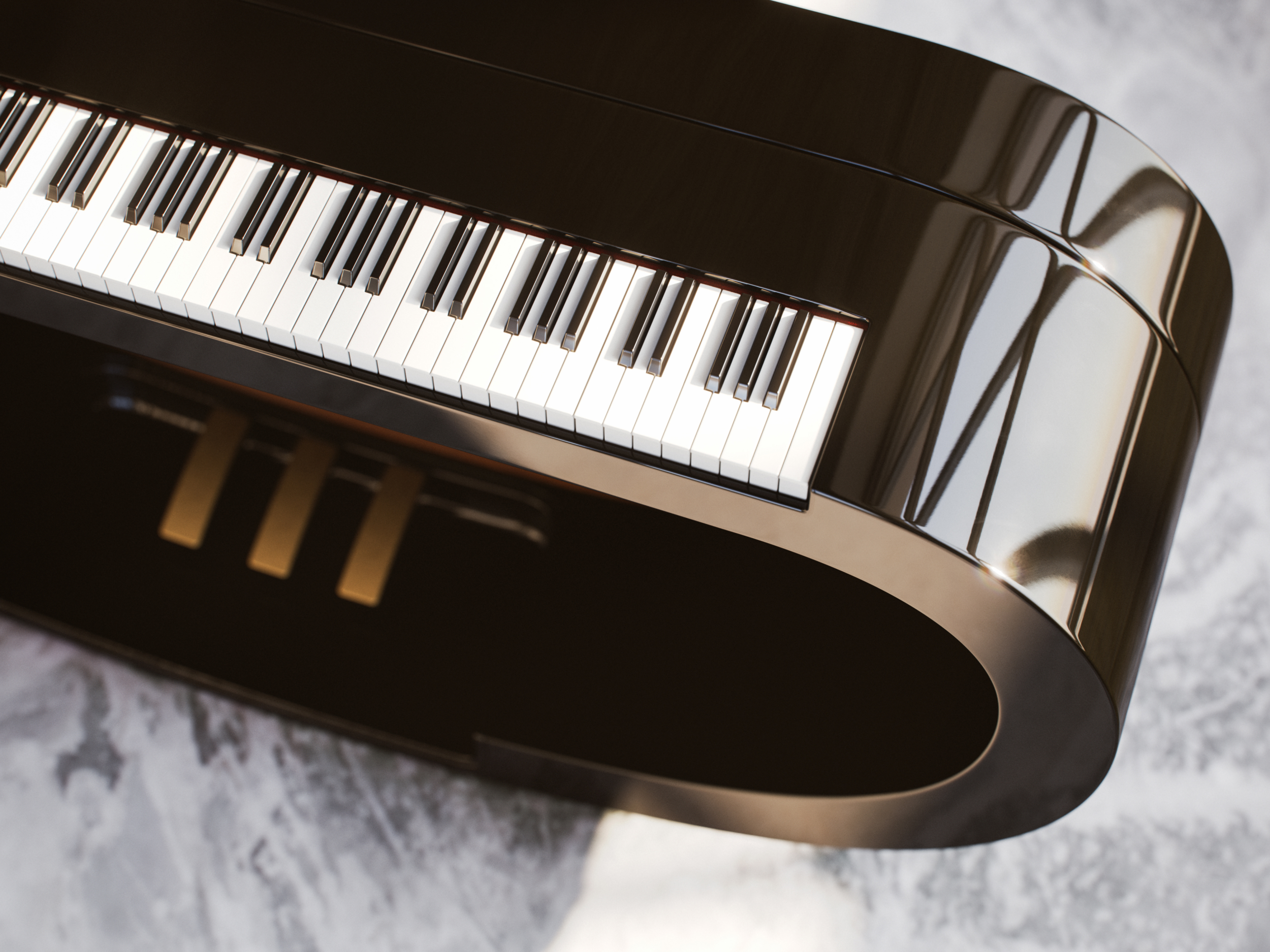
The Whipsaw Design Lab concept reimagined the upright piano by exposing its internal workings. Its strings are arranged on a spiral-shaped steel frame, while hammers and dampers are activated by solenoids and illuminated so the player and audience can see the mechanism creating the sound.
Rather than treating engineering as something hidden beneath the product's exterior, Ravenchord makes the relationship between mechanism, movement, and sound part of the product itself. The result demonstrates how physical systems can become a source of interaction, emotion, and differentiation when design considers technology and experience as one.
Hardware products have to survive in the physical world, which introduces constraints that software products can often avoid.
Thermal management is one example. Components generate heat, and that heat needs to be managed without compromising performance, reliability, acoustics, size, or aesthetics.
Power consumption creates another set of constraints, particularly for portable and connected products. Battery capacity, charging behavior, component efficiency, and power management can all influence the physical architecture.
Supply chain considerations can be equally important. A component that is technically ideal may become a liability if it is difficult to source, has a short lifecycle, or creates production risk.
Manufacturing introduces its own challenges. Materials, tolerances, tooling, assembly processes, quality requirements, and production volumes all influence what can be manufactured reliably and economically.
Then there is the human dimension. A product can meet every technical specification and still fail because it is uncomfortable, confusing, difficult to maintain, or simply unpleasant to use.
That is why hardware design benefits from multidisciplinary collaboration early in development rather than sequential handoffs between engineering, industrial design, and manufacturing.
Custom hardware design becomes particularly valuable when a product's requirements cannot be satisfied effectively by existing solutions. A specialized medical device, industrial sensor, connected consumer product, or new computing platform may all require different levels of customization.
Companies should consider custom hardware design services when physical differentiation is strategically important, when the product has demanding performance or power requirements, when the form factor is unusual, or when proprietary technology creates meaningful competitive advantage.
A hardware design company can help evaluate these tradeoffs early, determining whether custom engineering is justified by the product's expected performance, differentiation, production volume, and long-term commercial potential.
There is no universal timeline for hardware design. A relatively simple product using established technologies can move from concept to production much faster than a complex system involving custom electronics, specialized materials, regulatory requirements, or new technology.
The timeline is influenced by product complexity, technical risk, number of prototypes, manufacturing process, component availability, certification requirements, production volume, and how clearly the product requirements have been defined.
A typical development path may include early concept and architecture, detailed design, engineering prototypes, design refinement, validation, and production preparation. These stages often overlap rather than proceeding as a strict linear sequence.
For complex hardware, the goal should not be to minimize the number of development stages. It should be to reduce uncertainty as early as possible, when changes are still relatively inexpensive.
Choosing the right hardware design company is ultimately about finding the right combination of technical capability, product thinking, and development experience. The best hardware design companies understand that successful hardware development requires more than electrical engineering alone.
They connect hardware architecture with industrial design, user experience, prototyping, manufacturing, and the commercial objectives behind the product. When evaluating hardware design services, look for evidence of experience with products similar in complexity to yours.
Examine whether the hardware design company has taken products beyond concept development into prototyping, validation, and commercialization. Review the range of capabilities available internally and how engineering, industrial design, research, and manufacturing are coordinated.
It is also worth examining how the company approaches iteration. Hardware development inevitably involves uncertainty, so an experienced hardware design company should have a clear methodology for identifying unknowns, testing assumptions, learning from prototypes, and making decisions before problems become expensive.
Finally, look at the work itself. A portfolio can reveal how a hardware design company thinks far more clearly than a list of capabilities. Look for evidence that the team has solved meaningful technical and human problems, not simply produced attractive industrial design.
Hardware design is often framed as an engineering problem, but the most successful physical products demonstrate that it is also a product strategy problem. The decisions made during hardware development determine what the product can do, how it feels, how it is manufactured, what it costs, how it evolves, and how users perceive it.
That is why the best hardware design processes do not treat engineering, industrial design, user experience, and manufacturing as separate disciplines operating in sequence. They bring those perspectives together early enough for each to influence the others.
Gridstack shows how technical modularity can become a simpler user experience. IonQ Forte Enterprise demonstrates how sophisticated technology can be translated into an approachable physical system.
Ravenchord shows how engineering itself can become part of the emotional experience of a product. Each represents a different answer to the same fundamental question: how should technology exist in the physical world?
For companies developing the next generation of physical products, hardware design is therefore not simply about making something work. It is about creating the architecture, experience, and physical reality that allow an idea to become a product people can use, understand, manufacture, and remember.
Hardware design is the process of developing the physical technology behind a product, including its electronic, mechanical, and physical systems. Depending on the product, it can involve system architecture, circuit design, PCB design, embedded hardware, prototyping, testing, and preparation for manufacturing.
Hardware design services can include system architecture, electronic design, PCB design, embedded hardware development, mechanical and enclosure engineering, prototyping, testing, validation, design for manufacturing, and production strategy.
Custom hardware design is the development of physical technology specifically around the requirements of a particular product. It can provide greater control over functionality, performance, form factor, power consumption, and differentiation than relying entirely on off-the-shelf hardware.
A hardware design engineer develops and evaluates the physical electronic systems required for a product. Their work can include architecture, circuit design, component selection, PCB development, prototyping, testing, troubleshooting, and preparation for production.
PCB design is one part of hardware design. Hardware design encompasses the broader architecture and physical technology of a product, while PCB design focuses specifically on arranging and connecting electronic components on a printed circuit board.
Hardware design timelines depend on product complexity, technical risk, prototyping requirements, testing, certification, component availability, manufacturing processes, and production volume. Simple products can move quickly, while complex hardware programs may require multiple rounds of engineering and validation.
Hardware design costs depend on the product's complexity and development requirements. Major cost factors include engineering, custom electronics, industrial design, prototyping, testing, certification, tooling, manufacturing requirements, and production volume.
A company should consider working with a hardware design company when it needs specialized engineering expertise, custom hardware, physical product development, prototyping, manufacturing preparation, or multidisciplinary support connecting technology with industrial design and user experience.
A strong hardware design company combines technical expertise with product thinking and practical development experience. Evidence of successful prototyping, testing, manufacturing, multidisciplinary collaboration, and commercially launched products is often more valuable than a long list of individual capabilities.
Share this article


.svg)
.svg)