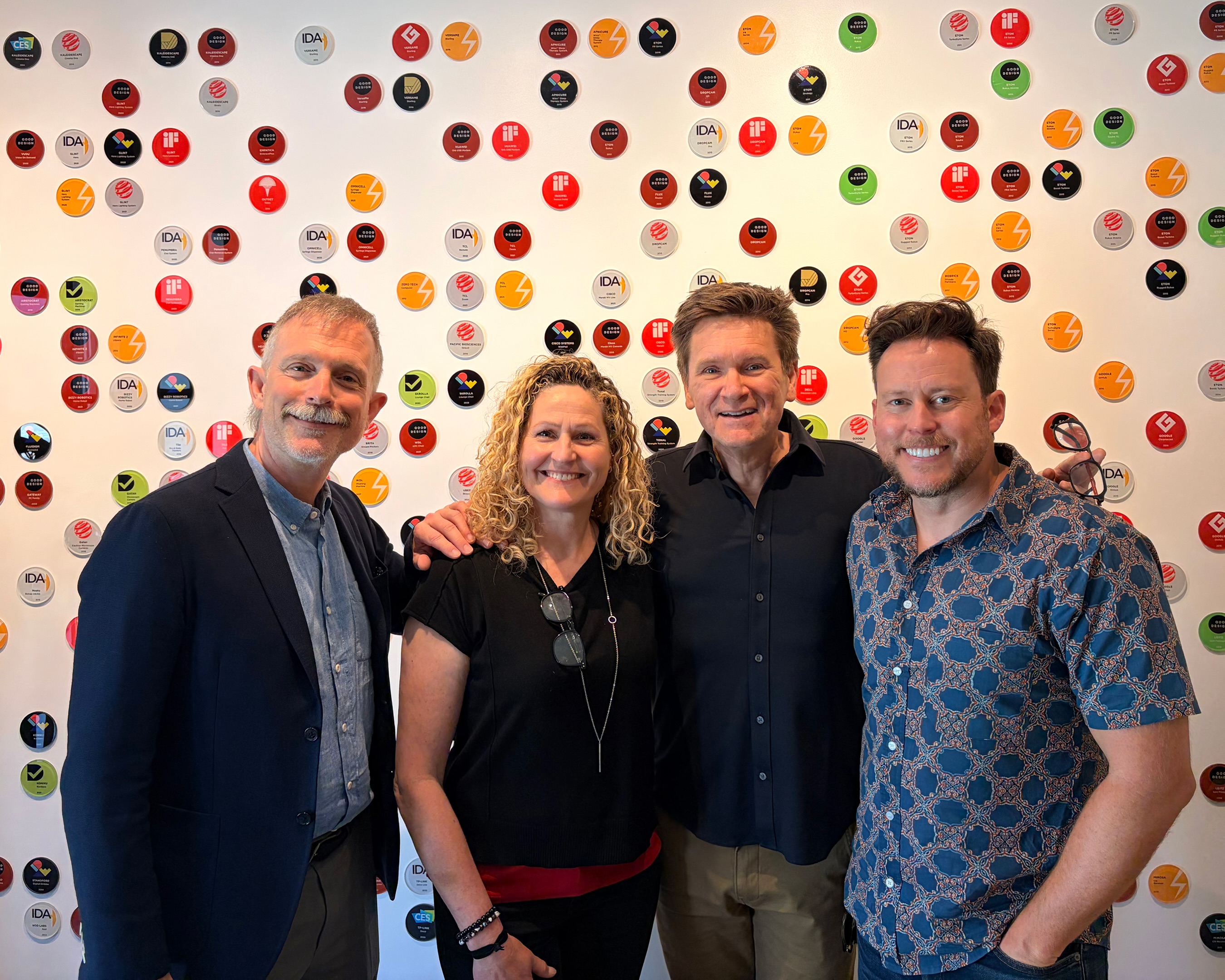


On Thursday, October 8, we opened our Potrero Hill studio for an SF Tech Week evening with our co-hosts Vizcom and Automat. The room was full of founders, engineers, designers and investors, and the goal was to show, not tell, how a physical product launch actually comes together today. Instead of a theoretical framework, we used one real project and the real assets behind it, and invited the partners whose tools made it possible to show their part of the story.
For more than 26 years, Whipsaw has partnered with founders, startups and global brands to design physical products, digital experiences and brand systems that get to market and win. We opened with how we structure those partnerships: around what works for each partner, not what a corporate model demands. Some teams go all in with us from strategy through launch. Others start smaller, with an opportunity workshop or an experience audit, and build from there. Whether a project calls for one capability or all of them, the same depth and rigor show up across physical, digital and brand.
Historically, bringing a product to market has been sequential, expensive and full of handoffs. Industrial design finishes, then brand starts, then packaging, then the website, then the campaign. Each discipline waits on the one before it, context gets lost at every handoff, and the calendar stretches.That model is changing. Today we move in parallel. Physical, digital and brand work happen at the same time, and each touchpoint informs the next. The product shapes the brand, the brand shapes the packaging, and the packaging shapes the story. To show what that looks like in practice, we walked through a project of our own.
Rise is a mobility products company from the team at Whipsaw. It started with a cane designed around dignity, portability and everyday life. Most canes come with a compromise: clunky to carry, awkward to store, or out of step with personal style. Rise folds in half in one simple motion, so it can tuck into a bag, ride on a car seat, or hang from the edge of a table. We built it from the ground up over seven years, from first sketches through manufacturing, and it's now available for pre-order at risecane.com.We shared the industrial design story through its real iterations. Early hinge concepts taught us what didn't work. Handle and color studies shaped how Rise feels in the hand. The fold mechanism and material choices made it light enough to carry and strong where it counts. Finally, we showed the design that landed. Seeing the dead ends next to the final product made the point that good design is rarely a straight line.
From there we moved into brand strategy. We built the Rise brand before we designed a logo, defining who it's for, what it stands for and how it should feel. The guiding idea was confidence: support should expand what someone can do, not narrow it. Only once that foundation was in place did we move into the identity system that now carries across the product, packaging and site.
The turning point of the talk was a simple idea: designing a product is not the same as launching it. Once the design is done, a long list of work begins. That list includes manufacturing, packaging, legal, the website, imagery, commerce, PR, shipping, fulfillment, customer service and content. For a small team, this is where launches stall. None of it is glamorous, and all of it has to happen at once.
This is where Automat came in. We introduced Sara, our Workforce agent from Automat. She's embedded in the tools we already use, context aware across our projects, and working around the clock. We showed exactly what she did on Rise:
Automat also walked through how the agent works day to day, including texting with the team, and the controls behind it: audit trails, granular permissions and real-time monitoring. The takeaway wasn't that an agent replaces the team. It's that the team spends its time on judgment and craft instead of chasing details.
With manufacturing, packaging, operations, brand and compliance all in motion, we still needed an eCommerce site. We turned to Modulify to build the Rise website and connect it to Shopify for commerce. It was fast to build, easy to refine as the product and story evolved, and easy for our team to own after launch, without waiting on a long development cycle.
Then came the campaign, for a product that wasn't physically in our hands yet. Traditionally that means waiting for samples or commissioning expensive renders and shoots. Vizcom showed a different path: build context first, then generate. We started from mood boards, sketches and a clear visual hierarchy, then produced photorealistic imagery of Rise in many real-world settings. One product, many contexts. In a live demo, the Vizcom team showed how quickly a designer can move from a sketch to launch-ready visuals while keeping full control of the aesthetic.
We closed with the idea behind the whole evening. AI doesn't remove the craft; it moves it. The skill shifts toward vision, management, selection, editing, retouching and accuracy: knowing what good looks like and holding the work to that bar. The result is that small teams with good tools and strong taste can have outsized impact, taking a product from idea to market with fewer handoffs and more time for the decisions that matter. For founders, that means a launch that once took a large team and a long runway is now within reach of a focused one.
Automat is offering an extended trial of their Workforce agent. If you want to see what an AI teammate could take off your plate, book a time to get set up here: Book Your Trial
Share this article


.svg)
.svg)