

Why purpose-built design wins the categories that engineering opens.
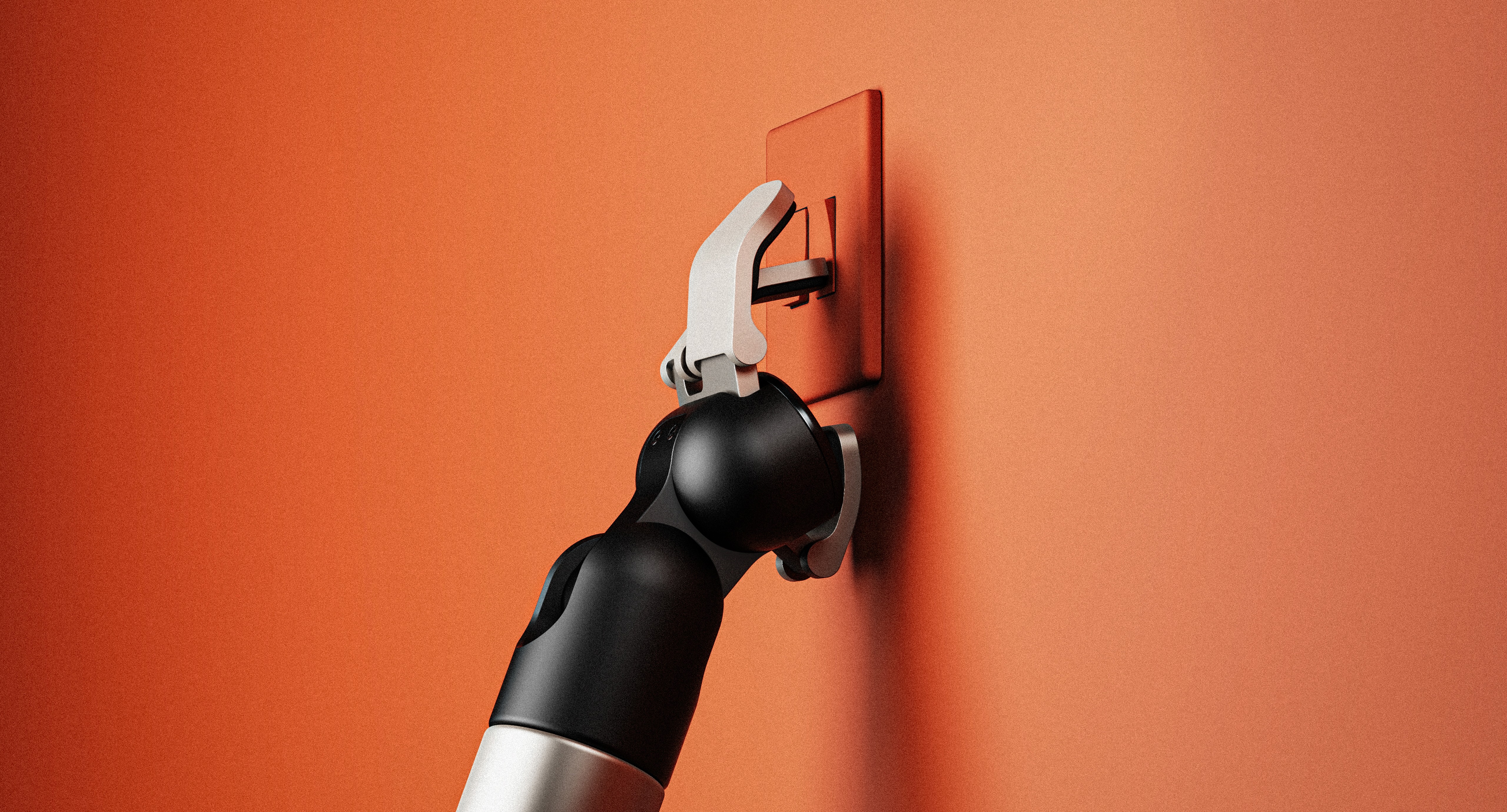
Most robots fail not because of bad engineering, but because nobody designed them to be wanted.
That sentence will feel obvious to anyone who has watched a beautifully engineered robot quietly disappear from the market. It will feel heretical to anyone who believes the next decade of robotics will be won on sensor fusion, motor torque, or model size. Both reactions miss the point.
Robotics startups raised over $7.2 billion in 2024 alone, yet most of these projects still struggle to pass early user-adoption tests (Source). Research on first impressions shows humans form lasting trust judgments in roughly 7 seconds, and human-robot interaction studies suggest the window may be even shorter (Source). >12% of humanoid robotics companies competing in China are expected to survive consolidation by 2026 (Source)
The robotics industry is in the middle of a category shift that it has not fully acknowledged. For decades, robots lived behind safety cages. Their users were trained operators. Their context was the factory floor. Form followed function in the most literal sense, and emotion was irrelevant. The robot did not need to be liked. It only needed to be reliable.
That world is gone. AI, sensing, and lower-cost actuation have let robots leave the factory and enter restaurants, hospitals, gyms, and living rooms. The technical barriers fell. The business case appeared. Capital flooded in. But a new problem emerged that the engineering team alone cannot solve: robots now have to coexist with people who never asked for them.
Engineering asks whether a robot can be built. Design asks whether it should be.
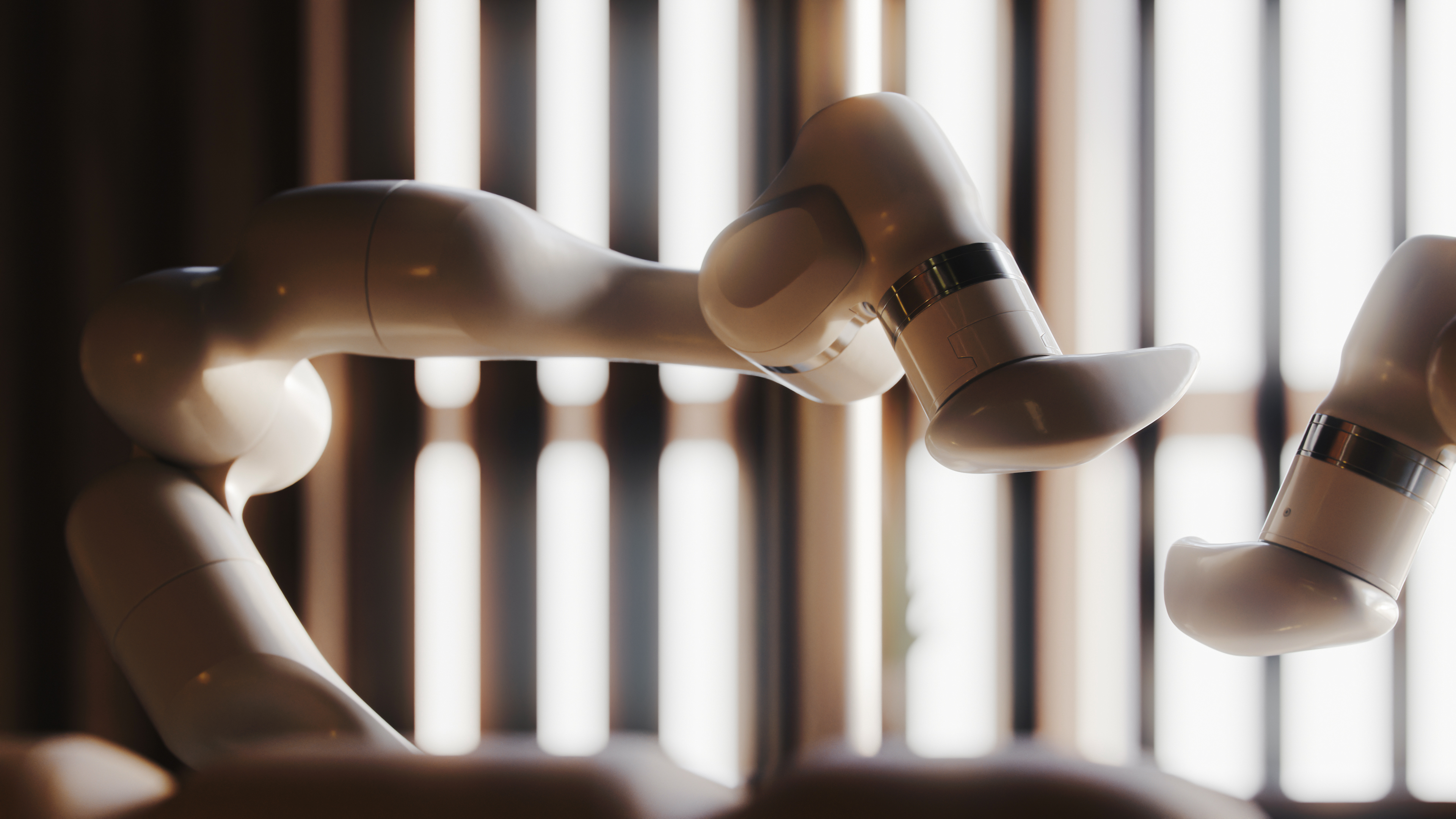
Most robotics companies are still organized around engineering excellence. They ship machines that work technically, but don’t land in the market. Users don’t adopt, reviews are lukewarm, and the product gets quietly shelved.
The industry's default response is technical: add another camera, improve the perception model, train on more data. These investments are real, but they treat the symptom. The underlying cause is a design foundation that was never built. Robotics culture still treats industrial design as a finishing step — the use case gets locked, the architecture gets set, the machine works, and only then does anyone ask what it should look like, how it should move, how it should feel to be near. By then, those answers have been decided by default.
If adoption is the real measure, not function, the work changes. You stop asking whether the machine runs and start asking whether it makes sense to the people it will live with. That question has to be answered early, by people who understand the user and the use case at the same depth as the engineering team understands the hardware. When that understanding is present, users feel considered. When users feel considered, they trust. The robot's posture at rest, the sound its motors make, the way it pauses when someone walks past — these are not aesthetic concerns layered on top of engineering. They are the engineering.

Three pillars have to carry any robot designed to live in human space. Trust. Purpose. Presence.
Trust is the precondition. Users have to trust a robot before they can like it. These machines move around your environment, so trust is non-negotiable. Every design decision prioritizes safety, predictability, and peace of mind before anything else. Users grant trust slowly and revoke it quickly. A single jerky movement, an awkward sound, or a glance from a poorly placed sensor can permanently damage a robot's relationship with its user.
Purpose is the brief. A robot designed to do one thing brilliantly will outperform one designed to do everything adequately. The generalist humanoid has become the industry's favorite fantasy, but it fails in practice because a robot that tries to do dishes, fold laundry, and greet guests cannot excel at any of them. Form must follow utility, not the other way around. When form is decided before purpose is locked in, you end up with a robot whose shape is at odds with its function.
Presence is the consequence. Robots inhabit human environments. Their size, color, material, and motion shape how they are received before they have done anything. A parking garage robot and a living room robot have nothing in common, and the moment you try to make one that works in both spaces, you have made something that belongs in neither.
While all three pillars are design work, none of them can be done in isolation from engineering. Design builds the foundation — the form, the intent, the experience a robot needs to deliver. Engineering is most effective when it's chasing the right problems, and those problems are defined by design decisions made early, not late.

The robotics companies that win the next decade will not out-engineer the competition. They will out-design it. Engineering builds the robot. Design builds the category.
The question is not whether your robot can work. Modern engineering has made that question answerable. The question is whether anyone wants your robot in their life. That question is answerable, too, but only by a team willing to stop treating design as the paint job at the end of the process and start treating it as the foundation underneath.
A quiet reckoning is coming for companies that have confused capability with desirability. The first to recognize it will define what robots look, sound, move, and feel like for the next generation of users. The rest will be case studies in what happened when great engineering was not enough.
If you're building a robot that has to coexist with people, the design foundation matters before the first prototype ships. We distilled the framework above into 12 questions that expose exactly where that foundation is strong and where it isn't.
Run the diagnostic here: https://www.whipsaw.com/purpose-built-robotics
Share this article


.svg)
.svg)