

Most startup advice is built for software. Hardware founders are playing a different game, and they need different support.
There's no shortage of resources for founders. Accelerators, cohorts, bootcamps, communities. The startup ecosystem has built an entire infrastructure around the idea of helping people build companies. Most of it assumes you're building software.
Hardware founders know the gap. The advice that works for a SaaS product (ship fast, iterate cheaply, pivot on a weekend) doesn't translate to something you have to physically manufacture, certify, and put in someone's hands. The timelines are longer. The initial capital requirements are higher. The decisions are harder to undo. And the path from a clear problem to an investor-ready story is full of variables that no pitch deck template can account for.
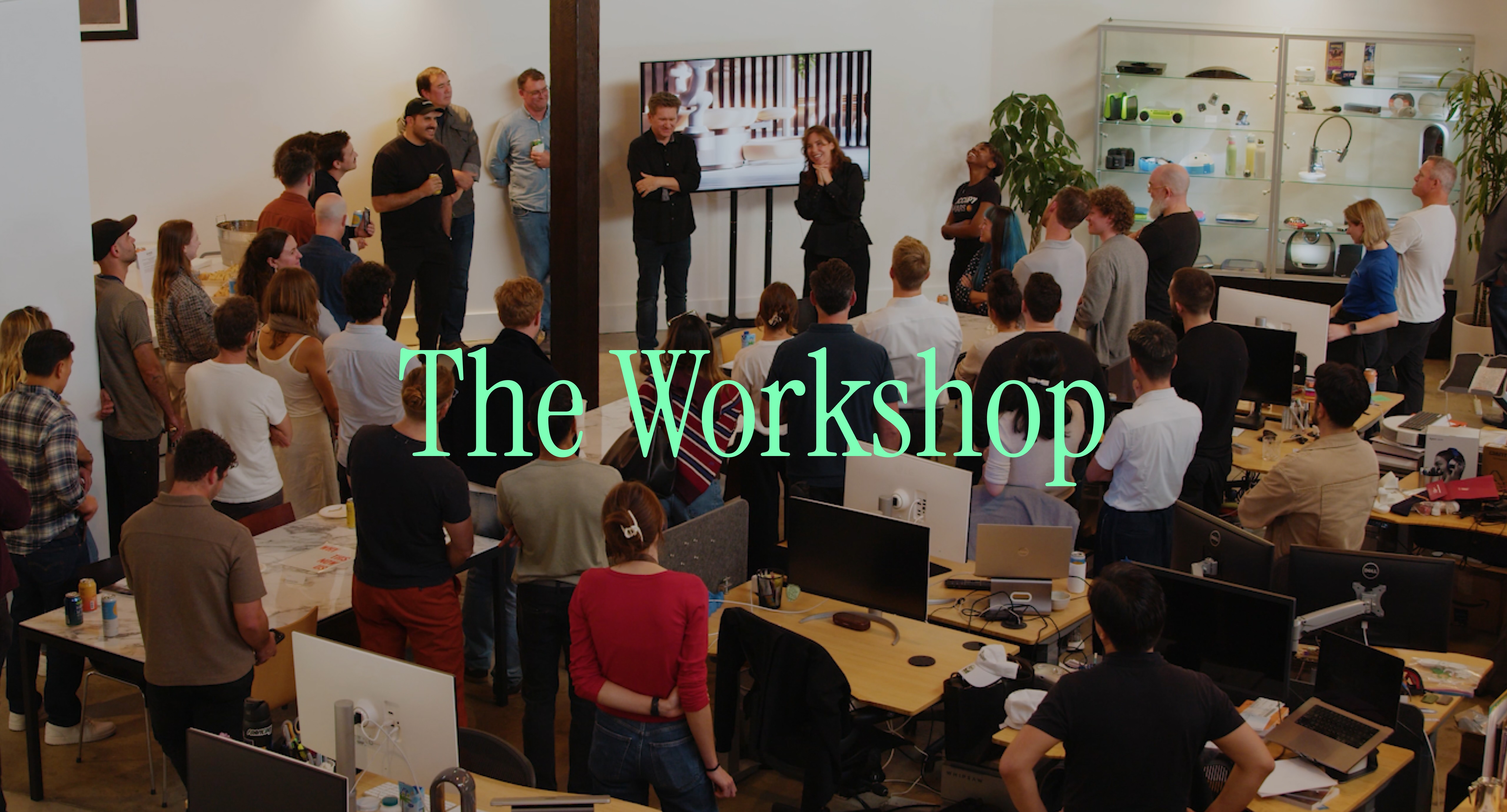
That's the gap The Workshop was built to close.
The reason early-stage hardware founders struggle isn't usually the idea. It's the translation layer between a compelling vision and a credible, fundable product story.
That translation requires more than business coaching. It requires industrial design, someone who can take a rough concept and turn it into something that can actually be made. It requires brand strategy, a clear identity that helps investors and customers understand what they're looking at and why it matters. It requires product thinking, not just what the thing does, but how it fits into a person's life and why they'd choose it over what already exists. And it requires all of this to happen in parallel, with each decision informing the others, before the window to raise closes.
Most accelerators can't offer that. They're optimized for speed and scale, which works well for software where the marginal cost of iteration is low. Hardware doesn't work that way. A poorly resolved brand doesn't just hurt your marketing. It sends the wrong signal to every investor who picks up the deck. A product concept that hasn't been pressure-tested by a real industrial designer is a liability on Demo Day. The gaps show.
What hardware founders need isn't just mentorship. It's a multidisciplinary team in their corner, one that's done this work before, across enough products and categories to know what separates the ones that get funded from the ones that don't.
“If you had just given me $250K, I’d still be tinkering with my prototype a year later.”
-Founder, Fall 2025
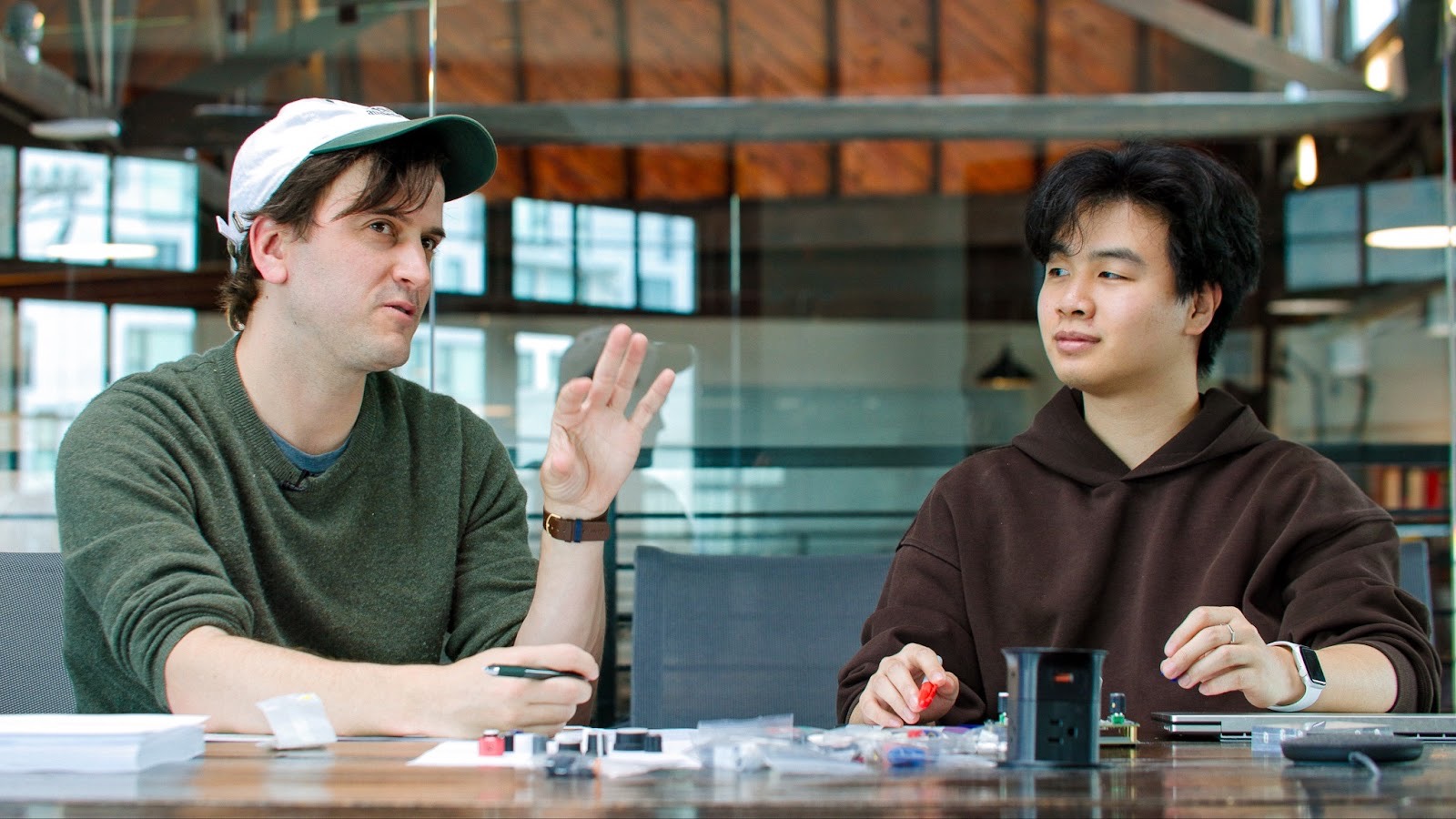
The Workshop is a 10-week, hands-on accelerator for early-stage hardware founders, built and run by Whipsaw. It's designed to take founders from a clear opportunity definition to a credible, investor-ready story, with Whipsaw's full practice engaged alongside them the entire way.
The program is structured in five two-week sprints, each building on the last:
Sprint 1 | Opportunity & Foundations — Define the problem, the user, and the market. Establish the early foundations of the product and business together.
Sprint 2 | Brand, Product, and Story Alignment — Align brand positioning, product concept, and narrative into a coherent direction. Whipsaw delivers identity work: mood boards, naming, visual direction, and early concept sketches.
Sprint 3 | Product & Strategy Refinement — Lock the core product and brand decisions through focused feedback and iteration. Explore fundraising strategy alongside product refinement.
Sprint 4 | Fundraising Assets & Narrative — Translate everything into investor-ready assets: renders, financials, pitch narrative, and a clear, specific ask.
Sprint 5 | Pitch Readiness — Finalize, rehearse, and pressure-test the pitch. Demo Day is the goal, but what comes after it matters just as much.
The program ends with Demo Day. A live pitch event where founders present to investors, partners, and the broader Whipsaw community, followed by an open mingling to meet and talk with founders one-on-one.
What makes The Workshop different isn't just the structure. It's the depth of involvement. Whipsaw designers, strategists, and engineers work directly with founders throughout, not as occasional advisors, but as a real team. Founders leave with a resolved product concept, a brand identity, a pitch deck, and rendered assets they can actually use. The work is done. The story is ready.
“It feels like I have a team, not just an accelerator.”
-Founder, Fall 2025
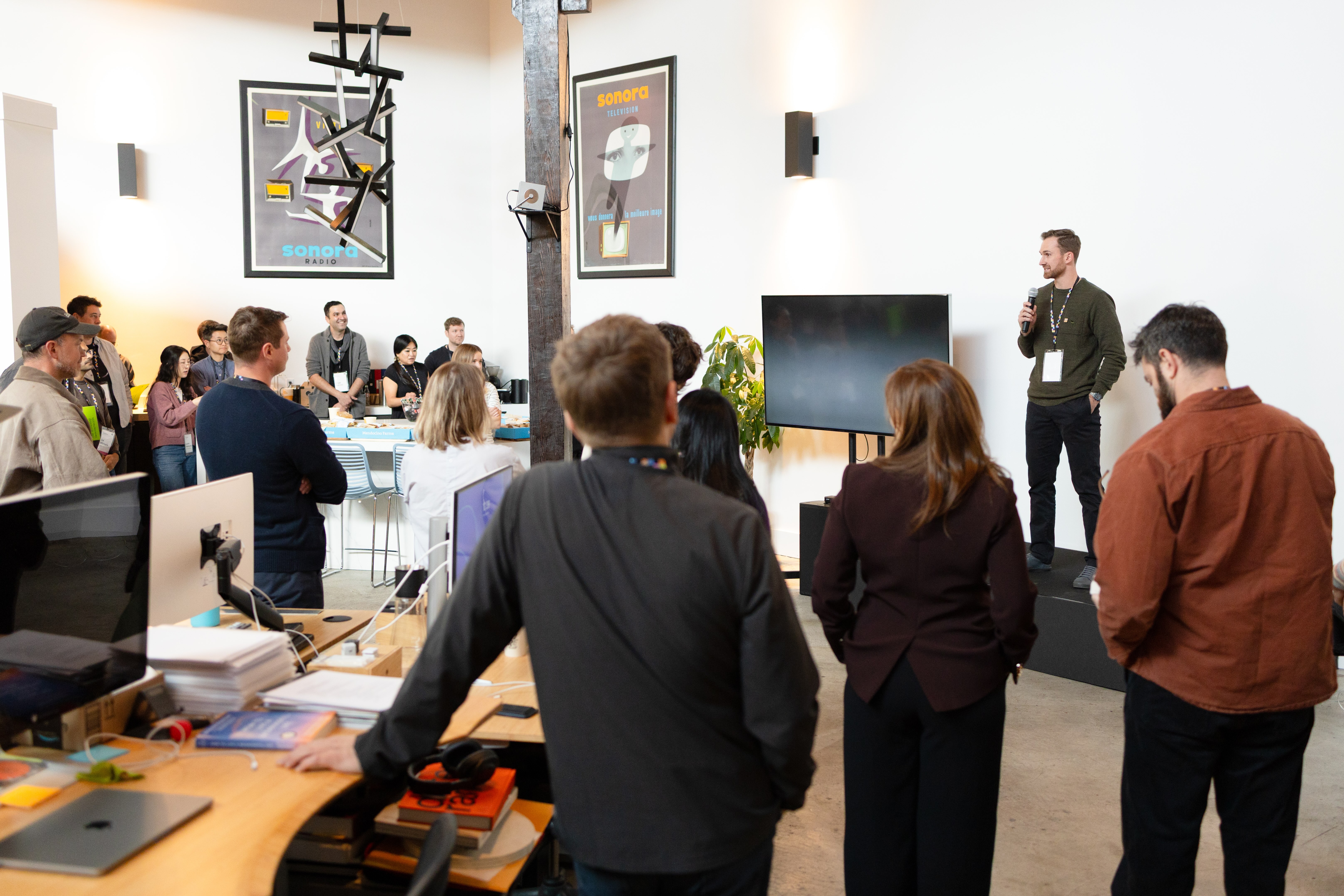
Whipsaw has spent over 25 years helping companies build products and brands that last, across consumer electronics, medical devices, robotics, software, and more. We've seen what separates the hardware companies that break through from the ones that stall: it's almost never the technology. It's the story, the identity, and the design thinking behind how the product shows up in the world.
We built The Workshop because we believe early-stage founders deserve access to that level of thinking, not after they've already raised, but before. At the stage when the decisions are still open. When a conversation about brand foundations can shape the product direction. A well-resolved concept sketch can turn a skeptical investor into a believer.
“Founders in our first cohort made remarkable progress in a short time. When you combine ambitious founders with designers who know how to ship real products, you accelerate everything. That’s what makes this program different: it’s hands-on, technical, and deeply collaborative.” -Cole Derby, VP of Industrial Design
If you're building a hardware product and you're trying to figure out how to get from where you are to investor-ready, this is what that path looks like.
We run this program twice a year, with applications reviewed on a rolling basis. Check it out, share, or apply if you have an idea to build.
Share this article


.svg)
.svg)